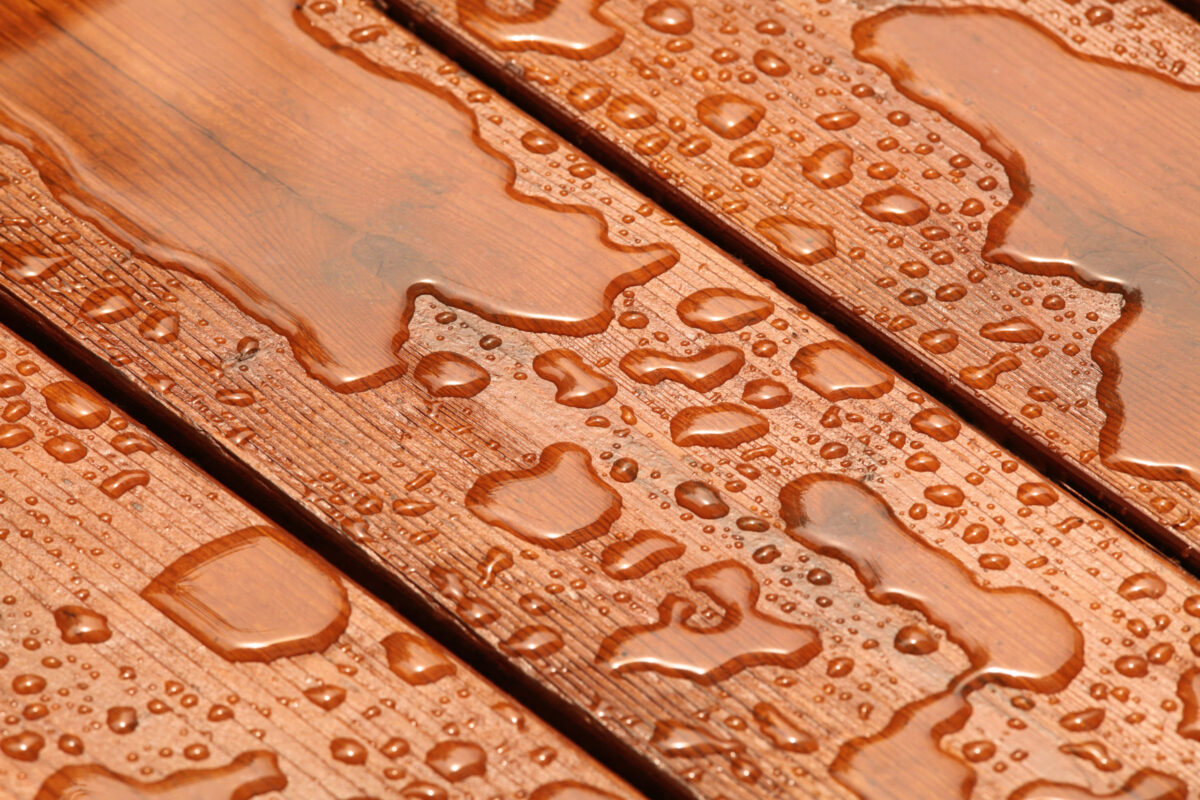
A deck is an extension of your living space that is susceptible to the harsh external environment. The scorching heat of the sun, the cold temperature of the winter season, and the humidity can greatly affect the quality of your deck and weaken it over time. That’s where different types of deck stains come in, to preserve your deck’s beauty and lively color and avoid costly repairs.
Staining your deck is extremely important for keeping your deck in great condition. Aside from preserving the aesthetic appeal of your wooden deck, staining also protects it from decay. Moisture can penetrate the materials of your deck more easily if it is not stained; thus, causing premature rotting which brings about a lot of dangers.
The right stain or sealer can help reduce moisture-related weathering and protect the appearance of exterior wood, but the level of protection varies by product. Stain selection should also be based on the condition of the wood, the amount of sun and moisture exposure, and the appearance you want to maintain.
When it comes to deck staining, there are three types of deck stains to consider:
- Clear stain
- Semi-transparent stain
- Solid stain
Modern stain products can also fall between these categories, including transparent/toner and semi-solid finishes. Opacity generally increases coverage and protection while reducing the amount of natural wood grain that remains visible.
If you are interested in having DeckGuru work on your deck, either fill out a contact form or call us at 571-707-8772.
Clear Deck Stain
If you are looking for a type of deck stain that offers enough protection but leaves the wood looking natural, then a clear stain is a great choice. Clear deck stains and sealers give the needed protection to your wood decking while retaining the natural look of the materials. Apart from that, it can lock the moisture out; thus, increasing the lifespan of your deck. If you live in a moist location or a place that rains constantly, then applying a clear stain on your deck is a good idea.
Keep in mind that “clear” does not automatically mean “no UV protection.” Some current clear wood sealers are formulated to repel water and provide UV protection while allowing the wood to weather naturally. However, clear finishes generally provide less overall protection than more heavily pigmented stains, so they may be better suited to homeowners who prioritize the natural appearance of the wood.
Because clear finishes allow the natural wood to weather, they may also allow the deck to gradually develop a gray appearance. Always check the specific product label to understand its UV, water-repellent, and mildew-resistance properties.
Semi-Transparent Deck Stain
Semi-transparent stains are one of the most popular choices by many homeowners when staining their decks. It is water repellent and provides enough protection against the harsh heat of the sun, and at the same time, allows the beauty of the wood to show through. Current semi-transparent products are available with water-repellent and UV-protection properties, although the exact level of protection depends on the product.
Semi-transparent stain is a useful middle ground: it adds noticeable color while still allowing the wood grain and texture to remain visible. Compared with a clear finish, it generally provides greater protection while retaining more of the wood’s natural appearance than a solid stain.
It doesn’t peel off like what usually happens in paint. Not only that, but semi-transparent deck stains are also easy to apply and reapply.
However, application and maintenance depend on the product and the condition of the existing finish. Always follow the manufacturer’s preparation, coat, and drying instructions rather than assuming every semi-transparent stain should be applied the same way.
Semi-transparent stains can be water-based or oil-based. Both types are still available, along with newer formulations designed to meet current performance and environmental requirements. Rather than choosing solely based on whether a stain is oil- or water-based, homeowners should compare the product’s preparation requirements, drying time, coverage, cleanup method, UV protection, and recommended recoat schedule.
Solid Deck Stain
Solid stains are the type of stains that sit on the wood surfaces only, instead of penetrating the wood materials. The good thing about solid stains is that they give homeowners a wide array of colors to choose from.
Solid-color stains provide significantly more coverage than clear or semi-transparent finishes and are designed to obscure most of the wood grain while allowing the underlying wood texture to remain visible. Current manufacturer guidance generally places solid stains at the highest-protection end of the stain-opacity spectrum.
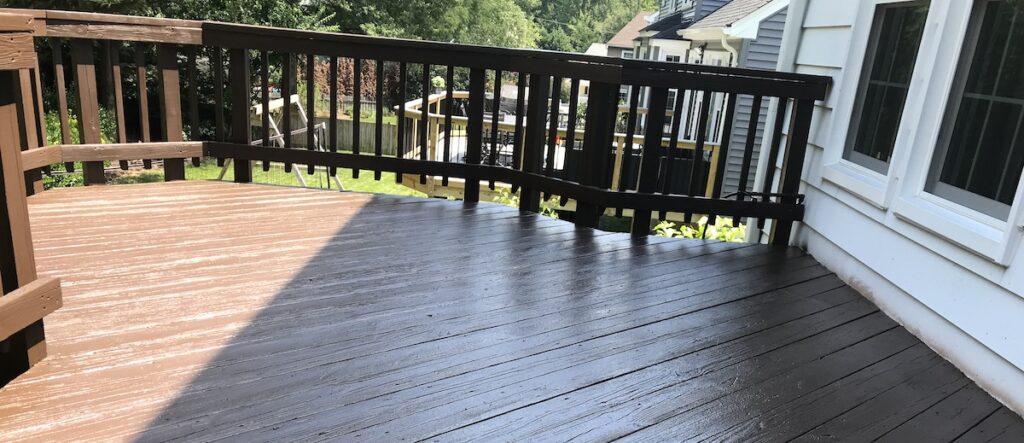
So if you are planning to add color or give a contemporary look on your deck, then solid stain is the best option for you.
Solid stain can also be useful when you want to create a more uniform appearance or reduce the visibility of weathering and imperfections. Keep in mind that greater coverage means less of the original wood grain will remain visible.
Which Type of Deck Stain Should You Choose?
Choosing the right type of deck stain depends on the look you want to achieve, the wood you’re working with, and the level of protection your deck requires. Here’s a breakdown of the three main types of stains to help you decide:
Clear Stains
- Best For: Highlighting the natural beauty of the wood while offering basic moisture protection.
- Appearance: Clear stains allow the grain, texture, and color of the wood to shine through. They provide a natural, untreated look.
- Protection: Clear products generally provide less protection than more heavily pigmented stains, but some current clear sealers include UV protection, water repellency, and mildew-resistant properties
- When to Choose: Opt for clear stains when preserving the natural appearance of the wood is more important than maximizing color retention. Check the specific product’s UV and water-protection claims before choosing one.
Semi-Transparent Stains
- Best For: Balancing between natural wood appearance and a moderate level of protection.
- Appearance: These stains add a hint of color while allowing the wood grain to be visible, enhancing the wood’s natural texture and beauty.
- Protection: Semi-transparent products generally provide more protection than clear finishes while allowing more wood grain to show than solid stains. Many current formulations provide water and UV protection.
- When to Choose: Choose semi-transparent stains if you want a natural wood look with added color and moderate protection from the elements. They’re ideal for decks that see some sun but not extreme weather.
Solid Stains
- Best For: Hiding wood imperfections and providing maximum protection in harsh environments.
- Appearance: Solid stains offer the most coverage, covering most of the wood grain while preserving some of the underlying wood texture.
- Protection: Solid-color stains generally provide the highest level of protection among the three opacity levels discussed here, although actual durability varies by product and application.
- When to Choose: Opt for solid stains if your deck has older wood with imperfections or if you want a bold, more uniform look. They can also be appropriate when greater coverage is more important than showing the natural grain.
Deck Stains for Different Wood Types
Different wood species react differently to stains, so it’s important to choose a product that complements and protects the type of wood used in your deck.
Rather than treating one stain type as universally “best” for a particular wood species, consider the condition, age, porosity, previous coating, and desired appearance of the deck. A stain manufacturer’s product label should always take precedence because products differ in where they can be applied and how the wood must be prepared.
For example, a current Olympic transparent oil-based product can be used on new or weathered pressure-treated wood as well as certain previously coated surfaces, demonstrating why the existing condition of the deck matters when selecting a product.
Cedar
- Recommended Stain: A clear, transparent, or semi-transparent product can be considered when you want to preserve cedar’s natural appearance, provided the product is approved for the wood and existing finish.
- Why: Cedar is naturally resistant to rot and decay, so it doesn’t require heavy coverage. Semi-transparent stains help protect against moisture while highlighting the wood’s natural beauty.
Pressure-Treated Wood
- Recommended Stain: Choose a product specifically approved for pressure-treated wood and follow the manufacturer’s preparation and moisture requirements. Both transparent/semi-transparent and solid products may be appropriate depending on the desired appearance and condition of the wood.
- Why: Pressure-treated wood tends to be more resistant to rot but can have a less attractive appearance. A solid stain helps cover imperfections and provides long-lasting protection from the elements.
Redwood
- Recommended Stain: Clear, transparent, or semi-transparent finishes can be considered when the goal is to showcase the natural color and grain, provided the product is suitable for redwood.
- Why: Lower-opacity finishes preserve more of the wood’s natural appearance.
Pine
- Recommended Stain: Semi-transparent or solid stain may be appropriate depending on the condition of the wood and the amount of coverage you want.
- Why: A semi-transparent finish preserves more grain, while a solid stain provides greater color coverage and can minimize the appearance of weathering and imperfections.
Hardwoods (e.g., Ipe, Mahogany)
- Recommended Stain: Use a product specifically formulated and approved for dense exterior hardwoods if staining is desired.
- Why: Dense hardwoods can behave differently from softer decking species, so product compatibility and preparation are particularly important. Always follow the stain manufacturer’s instructions rather than assuming a standard deck stain will perform the same way on every species.
Staining Process
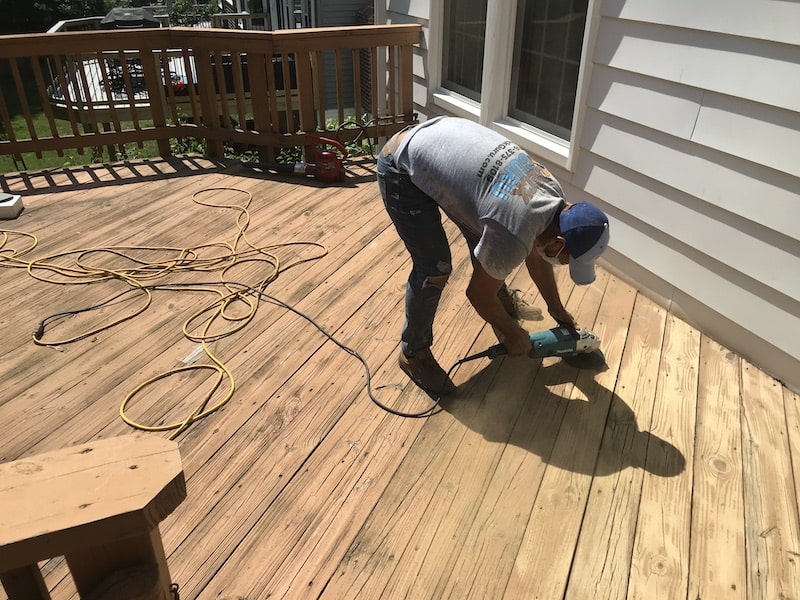
Application: Prior to staining, proper surface preparation is critical. The deck should be cleaned and prepared according to the stain manufacturer’s instructions, and the surface should be sufficiently dry before application. Depending on the condition of the existing coating, preparation may include cleaning, stripping, sanding, or other steps.
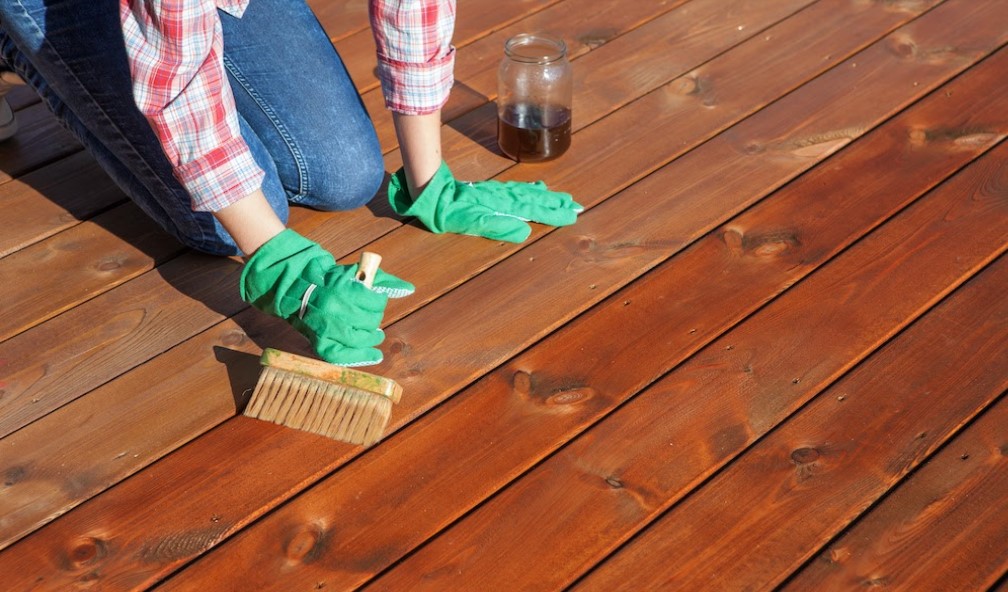
Always test the stain in a small, inconspicuous area before coating the entire deck. Current manufacturer guidance also recommends following the product label and technical data sheet for the correct number of coats, application tools, and drying time.
Apply the stain according to the manufacturer’s instructions rather than automatically applying multiple coats. Some clear, toner, and semi-transparent products are designed for one thin coat, while solid stains may require two thin coats.
Work systematically across the boards and maintain a wet edge where the product instructions call for it to help avoid lap marks. Pay attention to joints, edges, and end grain, and allow the stain to dry completely before returning furniture or allowing normal foot traffic.
Finish: Once the stain has fully dried, do not automatically apply varnish or polyurethane. Whether an additional clear coat is appropriate depends on the stain system. Many modern deck stains are formulated as stain-and-sealer products, so adding another finish can be unnecessary or incompatible. Always follow the specific manufacturer’s instructions for recoating and compatible products.
If you are running into the issue of having to stain your deck every year, you might want to get a Trex Composite Deck. Unlike traditional wood decking, current high-performance Trex decking does not require staining or painting. Its high-performance decking lines have protective shells designed to retain color and resist rotting, splitting, splintering, and insect damage. Routine cleaning is still recommended, so “low maintenance” is more accurate than “maintenance-free.”
This eco-friendly deck material is great because unlike wood, which fades over time, composite stays vibrant for many years. Wood decks also deteriorate faster than composite, so if your deck is looking a bit unsafe you might want composite for your deck replacement. TimberTech offers a similar low-maintenance alternative: its current Advanced PVC decking is designed to resist moisture, fading, and everyday wear without the need to sand, stain, or seal.
If you’re comparing wood with composite or PVC decking, maintenance should be part of the decision. Wood decking typically requires seasonal cleaning, sanding, and staining, while its current high-performance composite products require considerably less upkeep.
If you live in the Northern Virginia area and need help with replacing or repairing a deck, fill out a contact form or call us at 571-707-8772 to get started!