
At DeckGuru, we believe an aging or weathered deck doesn’t always need to be torn down and completely rebuilt. Since our company was created in response to a homeowner looking for a more affordable way to repair their deck, we’ve made it our mission to provide high-quality deck restoration solutions that extend the life and beauty of outdoor living spaces.
From staining and resurfacing to wood replacement and composite upgrades, our team helps homeowners throughout Northern Virginia find the right solution for their specific needs.
When it comes to choosing between deck stain and sealer, we can help you determine which option makes sense for your deck’s condition, appearance, and long-term maintenance needs. Contact DeckGuru today at 866-814-8188 to schedule a stress-free estimate.
Deck Stain vs Sealer: What Is the Difference?
The biggest difference between deck stain vs sealer is what each product is designed to accomplish.
A deck stain adds color or changes the appearance of the wood while also providing protection against outdoor elements. Depending on the product, stain can range from transparent and semi-transparent finishes that allow the wood grain to show through to more opaque options that provide greater color coverage.
A deck sealer, on the other hand, is typically selected primarily for protection. Clear or lightly tinted sealers can help repel water and reduce moisture absorption without dramatically changing the appearance of the wood.
However, the distinction isn’t always completely black and white. Many modern exterior wood products combine stain and sealing properties in a single product. This means homeowners should look beyond the label and consider what the product is specifically formulated to do.
Exterior stains can provide protection from environmental exposure while adding color, and some stains include built-in sealing properties.
What Does Deck Stain Do?
A deck stain is designed to enhance the appearance of exterior wood while providing protection. Stains are available in different levels of transparency, allowing homeowners to choose how much of the natural wood grain remains visible.
Common options include:
- Transparent or clear stains: Provide minimal color while emphasizing the natural grain.
- Semi-transparent stains: Add noticeable color while allowing much of the wood grain to remain visible.
- Semi-solid stains: Provide more color coverage while retaining some wood texture.
- Solid stains: Offer significant color coverage and create a more uniform appearance.
The right wood deck stain depends on the look you want and the condition of the boards. For example, a heavily weathered deck with inconsistent coloring may benefit from a more opaque finish than a relatively new deck with attractive natural grain.
What Does Deck Sealer Do?
A deck sealer is generally used to help protect wood from moisture and outdoor exposure while maintaining more of the wood’s original appearance.
A clear wood deck sealer can be a good choice when you like the natural color and grain of your deck and don’t want to dramatically change its appearance.
Sealing can be particularly useful because untreated exterior wood is exposed to:
- Rain and moisture
- Humidity
- Sunlight and ultraviolet radiation
- Seasonal temperature changes
- Dirt and debris
- Everyday foot traffic
A sealer isn’t a substitute for proper deck maintenance or structural repairs, but it can be an important part of caring for a sound wood deck.
Deck Stain vs Sealer: Which Is Better for Your Deck?
There isn’t one universal winner in the deck stain vs sealer debate. The better choice depends on what you want the finish to accomplish.
| Feature | Deck Stain | Deck Sealer |
| Adds color | Yes | Usually minimal or none |
| Shows natural grain | Depends on opacity | Generally yes |
| Helps protect against moisture | Yes, depending on product | Yes |
| Provides UV protection | Depends on formulation and pigment | Depends on product |
| Changes the deck’s appearance | More noticeable | More subtle |
| Good for weathered wood | Often | Sometimes |
| Best for natural appearance | Transparent/semi-transparent options | Clear or lightly tinted |
| Maintenance required | Yes | Yes |
| Available as combination products | Yes | Yes |
The key is to choose an exterior wood finish based on the condition of the deck and the level of protection and color you want.
When Should You Choose Deck Stain?
A deck stain may be the better choice if you’re looking to protect the wood while also improving its appearance.
Consider staining if:
- Your deck has faded significantly.
- You want to change or enhance the color.
- You want to make inconsistent boards look more uniform.
- You want the wood grain to remain visible but prefer more color.
- Your deck receives significant sunlight.
- You want an updated appearance without replacing the deck.
Pigmented stains can also provide a level of UV protection because pigments help shield the wood from sunlight. The specific level of protection depends on the formulation, so always follow the manufacturer’s recommendations.
Is Deck Stain Good for a Pressure-Treated Wood Deck?
A pressure-treated wood deck is a common candidate for staining or sealing, but the wood needs to be properly prepared before applying a finish.
New pressure-treated lumber can contain moisture from the treatment process. Applying a finish before the wood is ready can interfere with proper absorption and performance.
For an existing pressure-treated deck, its age, condition, previous coatings, and moisture content should all be considered before choosing a wood deck stain.
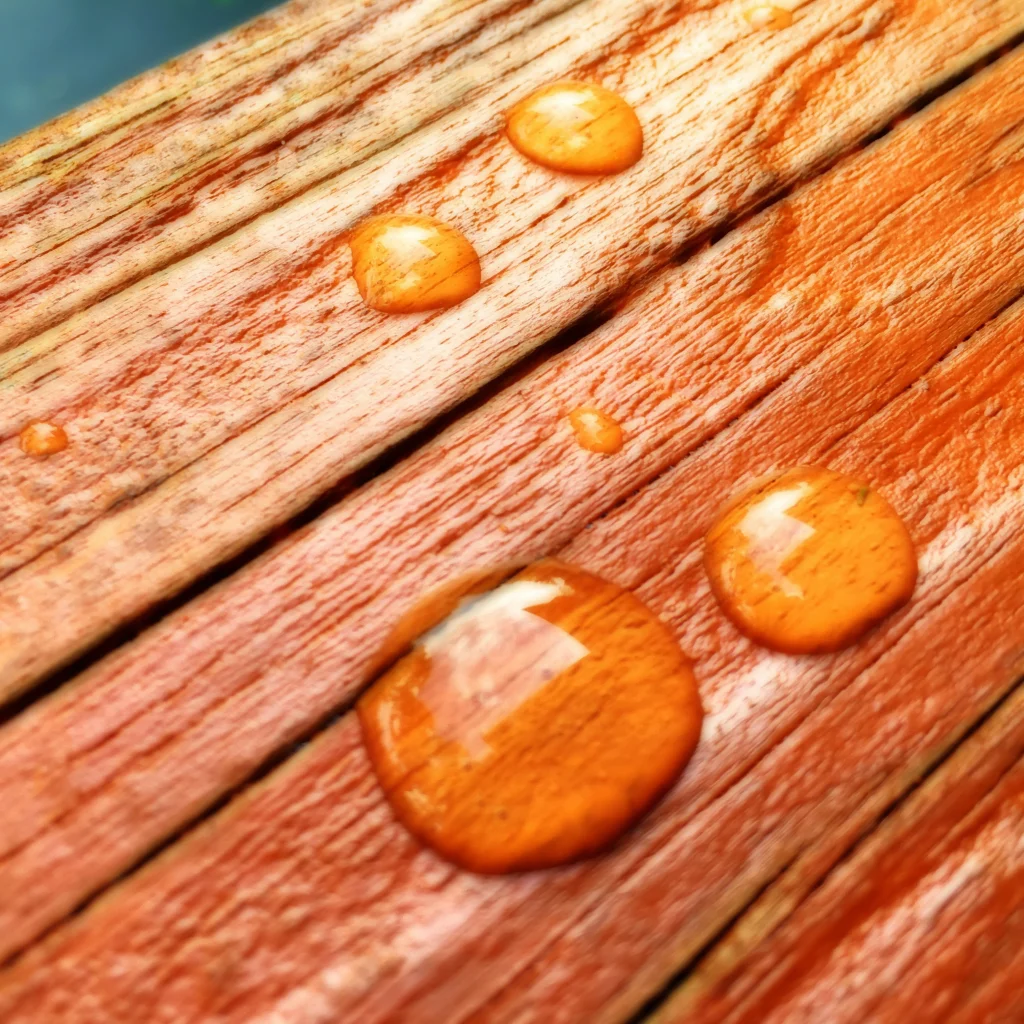
A simple water-drop test can provide a useful indication of whether wood is absorbing moisture. The Home Depot’s deck refinishing guide recommends placing drops of water on the boards: if the wood absorbs the water, it may be ready to accept a protective finish; if water beads on the surface, an existing finish may still be present.
When Should You Choose Deck Sealer?
A deck sealer may make more sense when your main priority is protecting the wood without significantly changing its appearance.
Sealing can be a good option when:
- You like the natural appearance of the wood.
- The boards are still in relatively good condition.
- You don’t want to add substantial color.
- Moisture protection is a primary concern.
- You want a subtle finish rather than a dramatic color change.
Keep in mind that clear doesn’t necessarily mean maintenance-free. Outdoor wood remains exposed to weather, and protective finishes eventually wear down.
That’s why deck maintenance should continue even after applying a quality wood deck sealer.
Deck Stain vs Sealer: What About Stain and Sealer in One?
Many homeowners are surprised to learn that they don’t necessarily have to choose between separate stain and sealer products.
Some exterior coatings are formulated to provide both color and protective properties. These products are commonly marketed as stain-and-sealer combinations.
This can simplify the finishing process, but the product still needs to be appropriate for your particular wood and project.
Before purchasing a combination product, check:
- Whether it is intended for exterior decks.
- Whether it is appropriate for your type of wood.
- What level of opacity it provides.
- How much UV protection it offers.
- How often the manufacturer recommends reapplication.
- Whether the existing finish needs to be removed first.
The product label matters more than simply choosing something advertised as a “stain and sealer.”
How to Know If Your Deck Needs Stain or Sealer
If you’re still unsure about deck stain vs sealer, start by looking at the deck itself.
1. Check the Wood’s Condition
Look for:
- Cracked or split boards
- Soft or spongy areas
- Rot
- Loose fasteners
- Peeling or failing finish
- Significant discoloration
- Excessive surface weathering
- Splinters
A finish should not be used to cover up structural problems. If boards are deteriorating, those issues should be addressed first.
2. Consider the Appearance You Want
Ask yourself whether you want to:
- Preserve the natural wood appearance
- Add a subtle color
- Create a stronger, more consistent color
- Completely transform the look of the deck
If preserving natural grain is the priority, a clear or lightly tinted deck sealer may be appropriate. If changing the appearance is important, a deck stain may provide more flexibility.
3. Think About Sun and Moisture Exposure
A deck exposed to intense sunlight may benefit from a finish formulated with UV protection. A deck that regularly gets wet may need a product designed to help manage moisture exposure.
Your home’s location matters, too. Northern Virginia decks experience changing conditions throughout the year, so the finish needs to be selected with local weather and the deck’s exposure in mind.
4. Consider Future Maintenance
Every wood deck requires some level of maintenance. Cleaning, inspection, repairs, and periodic refinishing can all help keep the structure looking and performing its best.
If you’re tired of repeatedly staining or sealing an aging wood deck, another option may be upgrading the surface with composite decking.
How to Prepare a Deck Before Staining or Sealing
Choosing the right deck stain or deck sealer is only part of the process. Proper preparation is just as important.
Before applying an exterior wood finish, the deck should generally be:
- Inspected for structural damage
- Cleaned thoroughly
- Cleared of dirt, leaves, and other debris
- Allowed to dry completely
- Sanded when appropriate
- Stripped of failing or incompatible coatings when necessary
- Repaired before finishing
Applying stain or sealer over dirt, mildew, peeling finish, or excessively wet wood can result in poor adhesion and an uneven appearance.
The Home Depot’s current wood deck maintenance guide recommends cleaning and preparing the wood before applying stain or sealant and emphasizes allowing the deck to dry before finishing.
For additional maintenance guidance, see DeckGuru’s deck maintenance tips.
Should You Stain or Seal an Old Wood Deck?
An older deck doesn’t automatically need a new coat of stain or sealer. Its condition should be evaluated first.
If the boards are structurally sound but faded and weathered, refinishing may be an effective way to improve the deck’s appearance and provide additional protection.
If the deck has extensive rot, damaged framing, or widespread structural problems, refinishing alone won’t solve the underlying issue.
DeckGuru can evaluate an existing structure and determine whether deck repair and restoration makes sense or whether deck replacement would be a better long-term solution.
In some cases, homeowners can preserve an existing deck structure while replacing worn decking with a more durable material.
Professional Deck Staining vs. DIY
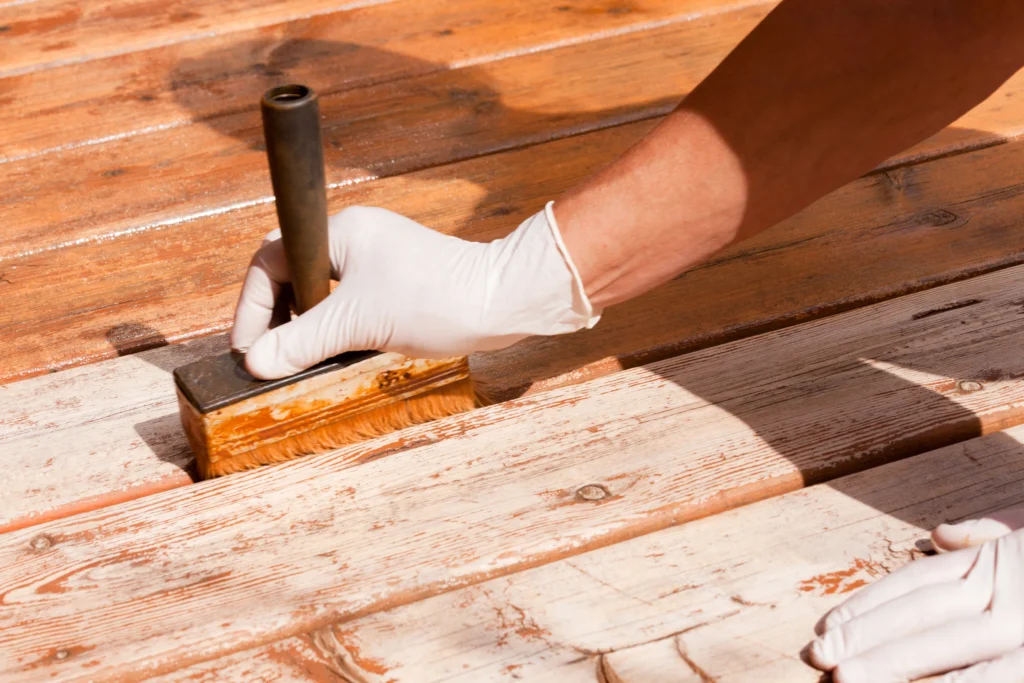
Applying deck stain or deck sealer may appear straightforward, but the quality of the finished result depends heavily on preparation and application.
Professional deck staining can be especially valuable when:
- The deck has multiple layers of old finish.
- Boards have significant discoloration.
- The surface needs extensive cleaning or sanding.
- You aren’t sure which finish is compatible with the existing coating.
- The deck has damaged boards that need attention.
- You want a consistent, professional appearance.
- You don’t have the time or equipment for the project.
Protect Your Deck With the Right Finish
When comparing deck stain vs sealer, the best choice depends on more than color. Your deck’s age, wood type, existing finish, structural condition, sun exposure, moisture exposure, and desired appearance should all factor into the decision. A quality deck stain can add color while helping protect exterior wood, while a deck sealer can provide protection while maintaining a more natural look. Either way, proper preparation and ongoing deck maintenance are essential for getting the most from your finish.
If you’re unsure whether your deck needs staining, sealing, repair, restoration, or replacement, DeckGuru can help you determine the right next step. Call DeckGuru at 866-814-8188 or contact us online to schedule your free estimate and find the best solution for your Northern Virginia deck.
Deck Stain vs Sealer FAQs
Is deck stain better than sealer?
Neither is automatically better. Deck stain vs sealer comes down to your goals. Stain is generally the better choice when you want to add or enhance color, while sealer is often preferred when protecting the wood while maintaining a more natural appearance.
Can you stain and seal a deck at the same time?
Some products combine staining and sealing properties, so a separate sealer may not be necessary. Always check the product manufacturer’s instructions before applying multiple coatings.
How often should you stain or seal a wood deck?
There isn’t one fixed schedule for every deck. The appropriate maintenance interval depends on the product, wood type, weather exposure, foot traffic, and condition of the existing finish. Inspect the deck regularly and follow the manufacturer’s recommendations for reapplication.
Should I stain or seal a new pressure-treated deck?
A new pressure-treated wood deck may need time to dry and weather before a finish is applied. The appropriate timing depends on the lumber and manufacturer’s recommendations. Test the wood’s ability to absorb water and make sure the surface is clean and dry before finishing.
Does a deck sealer change the color of wood?
A clear wood deck sealer generally changes the appearance less than a pigmented stain. However, some sealers are lightly tinted, so always check the product before applying it.
Can DeckGuru help me choose between stain and sealer?
Yes. DeckGuru provides professional deck staining, restoration, repair, replacement, and upgrade services throughout Northern Virginia. A professional evaluation can help determine whether your deck needs refinishing, repairs, restoration, or a larger upgrade.