Can existing deck framing support composite decking? In many cases, yes. Homeowners can often replace aging wood deck boards with durable composite decking without rebuilding the entire structure.
However, the existing deck frame must be structurally sound, properly spaced, securely fastened, and compatible with the composite decking manufacturer’s installation requirements. Reusing the frame can help reduce the scope of a deck replacement project, but overlooking hidden damage can create expensive problems later.
Before investing in new decking, let DeckGuru help you determine whether your current structure is a good candidate for an upgrade. Contact DeckGuru for a free estimate or call 703-982-0084 and take the first step toward a safer, lower-maintenance deck.
Key Takeaways: Can Existing Deck Framing Support Composite Decking?
- Yes, if the structure is sound: Existing framing may be reusable when joists, beams, posts, footings, and connections remain in good condition.
- Joist spacing matters: Many composite decking products require joists no more than 16 inches apart on center for standard perpendicular installations, while diagonal installations often require 12-inch spacing or less.
- Rot and structural damage must be addressed: Soft wood, deteriorated connections, sagging, and significant cracks can indicate that repairs or replacement are necessary.
- The frame must be level: Uneven joists can cause the finished composite surface to look wavy or feel inconsistent underfoot.
- Manufacturer instructions take priority: Spacing, fastening, ventilation, and support requirements vary by product.
- A professional assessment can prevent costly surprises: Inspecting the structure before installation helps determine whether selective repairs, partial replacement, or a full rebuild makes the most sense.
Can Existing Deck Framing Support Composite Decking Without a Full Rebuild?
Replacing the surface of an aging wood deck is commonly called deck resurfacing or deck replacement. Rather than removing the entire structure, a contractor removes the old boards and installs new decking over a suitable existing frame.
This approach can be practical when the deck’s underlying structure has years of useful life remaining. For example, a deck may have faded, splintered, or cracked boards even though its joists and beams remain in good condition.
However, the appearance of the surface alone does not establish whether the structure is safe. A deck that looks worn might have sound framing, while a deck with relatively attractive boards may conceal rot around the ledger, posts, or connections.
Before reusing the frame, a qualified contractor should evaluate the entire supporting structure, not just the areas visible between the old boards.
How to Inspect an Existing Deck Frame Before Installing Composite Decking
A thorough deck framing inspection is essential before removing the old boards or purchasing replacement materials. Several structural components deserve particular attention.
1. Check Joists for Rot, Cracks, and Moisture Damage
Joists are the horizontal framing members that support the deck boards. They must be strong enough to carry the intended loads and provide consistent support for the new decking.
Look for:
- Soft or spongy areas in the wood.
- Rot, fungal growth, or persistent moisture damage.
- Deep splits, significant cracks, or severe deterioration.
- Excessive sagging or twisting.
- Damage around existing fastener holes.
- Uneven joist heights that could affect the finished surface.
Surface discoloration does not always mean a joist needs replacement, but soft wood and significant deterioration should never be ignored. Some damage may be hidden beneath old boards or around fasteners.
If joists are damaged, a contractor can determine whether individual members can be repaired or replaced while preserving the rest of the frame.
2. Examine Beams, Posts, and Footings
Joists are only one part of the deck’s structural system. Beams transfer loads from the joists to the posts, while posts and footings help support the entire structure.
Inspect these components for decay, movement, splitting, or visible deterioration. Pay particular attention to areas where wood contacts the ground, rests on concrete, or is exposed to standing water.
Posts that lean, beams that sag, or footings that have shifted may indicate more extensive structural problems. These issues should be evaluated before installing composite decking.
A new surface cannot correct an unstable foundation. If major supporting components are compromised, rebuilding or substantially repairing the structure may be necessary.
3. Inspect the Ledger Board and Connections
The ledger board connects an attached deck to the house. Its condition and attachment are especially important because problems at this connection can affect the safety of the entire deck.
Look for signs of wood decay, improper flashing, water intrusion, loose fasteners, or separation between the deck and house. Joist hangers and other structural connectors should also be checked for corrosion, missing fasteners, and damage.
Do not assume that adding screws or replacing a few boards will resolve a deteriorated ledger connection. A contractor should determine the appropriate repair based on the condition of the structure and applicable building requirements.
4. Evaluate the Overall Stability of the Deck
A deck that noticeably bounces, shifts, or slopes may need more than new surface boards.
Although some movement can have different causes, excessive movement may point to problems with joists, beams, posts, bracing, or connections. Railings and stairs should also be assessed, particularly if they are loose or attached to deteriorating wood.
Deck Joist Spacing: Can Your Existing Frame Support Composite Boards?
One of the most important factors in determining whether you can replace wood deck boards with composite is joist spacing.
Joist spacing is measured from the center of one joist to the center of the next. Composite decking needs adequate support to limit flexing and maintain the performance expected from the product.
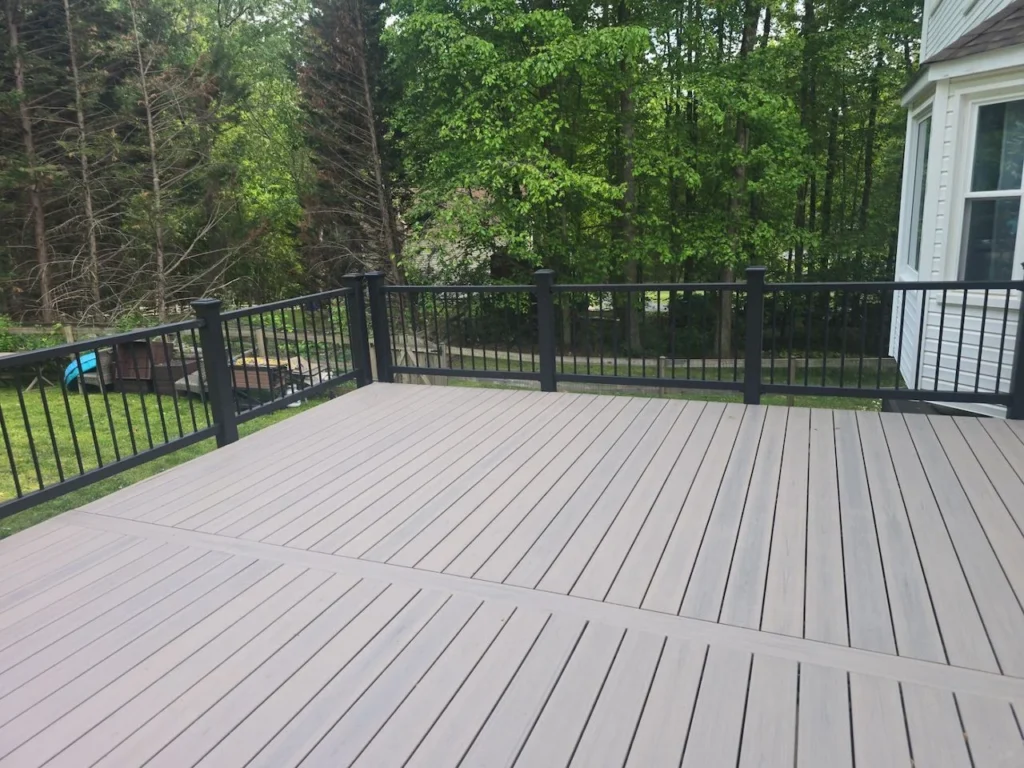
For many standard composite decking installations, manufacturers specify a maximum spacing of 16 inches on center when boards run perpendicular to the joists. Diagonal installations commonly require closer spacing, often 12 inches on center or less.
These measurements are general guidance, not universal specifications. The selected product’s installation instructions must determine the actual requirements.
What If Existing Deck Joists Are 24 Inches Apart?
Some older wood decks have joists spaced 24 inches on center. That spacing may be acceptable for certain wood decking applications, but it is too wide for many standard composite products.
Depending on the product and framing conditions, a contractor may be able to add joists between the existing members to provide the necessary support. Additional blocking or other framing modifications may also be needed.
Before making changes, confirm the required spacing for the exact composite board, the direction in which it will be installed, and any applicable structural requirements.
The official Trex guide to installing and spacing deck joists explains why proper support matters and discusses adding framing when existing joists are too far apart.
Why Joist Spacing Affects Composite Decking Performance
When joists are too far apart, deck boards may flex excessively underfoot. Insufficient support can contribute to an uneven walking surface and problems with fastening or long-term performance.
A properly spaced frame provides the support the decking needs. The framing should also be consistent in height, adequately secured, and appropriate for the expected loads.
If the existing layout does not meet the manufacturer’s requirements, the solution may be to modify the framing rather than abandon the project altogether.
For more guidance, consult TimberTech’s deck joist spacing and blocking guide.
How to Prepare an Existing Deck Frame for Composite Decking
Once the structure has been evaluated, the next step is determining what preparation is necessary before installation.
Remove the Old Deck Boards and Inspect the Exposed Framing
Removing the existing boards provides a clearer view of the joists and connections. This is an important opportunity to identify concealed damage that could not be fully assessed from above.
After removal, the contractor should inspect the exposed wood, check the spacing, and verify that the framing is secure. Any damaged components should be addressed before installation continues.
Correct Uneven Joists
Composite decking follows the contour of the frame beneath it. If some joists are higher or lower than others, the finished surface may have noticeable irregularities.
A contractor may need to replace damaged joists, correct height differences, or reinforce framing as appropriate. Any adjustments should maintain structural integrity and follow the applicable installation instructions.
Add Blocking Where Necessary
Blocking consists of framing pieces installed between joists. Depending on the structure and decking system, blocking can help limit joist movement and provide support at particular locations.
Additional support may be necessary at board seams, certain edges, stair transitions, or other locations specified by the manufacturer.
Blocking requirements depend on the decking product and the existing frame. It should not be added arbitrarily without considering the installation details.
Check Fasteners and Moisture Protection
Existing nails and screws may be corroded, loose, or unsuitable for the new installation. The framing should be checked for secure connections, and the contractor should use compatible, exterior-rated fasteners as required.
Where appropriate, joist protection tape and proper flashing can help manage moisture exposure and reduce the risk of future deterioration. These measures do not replace damaged lumber, correct poor drainage, or fix an improperly attached ledger.
For more details on preparation and installation, review the manufacturer’s TimberTech installation guides.
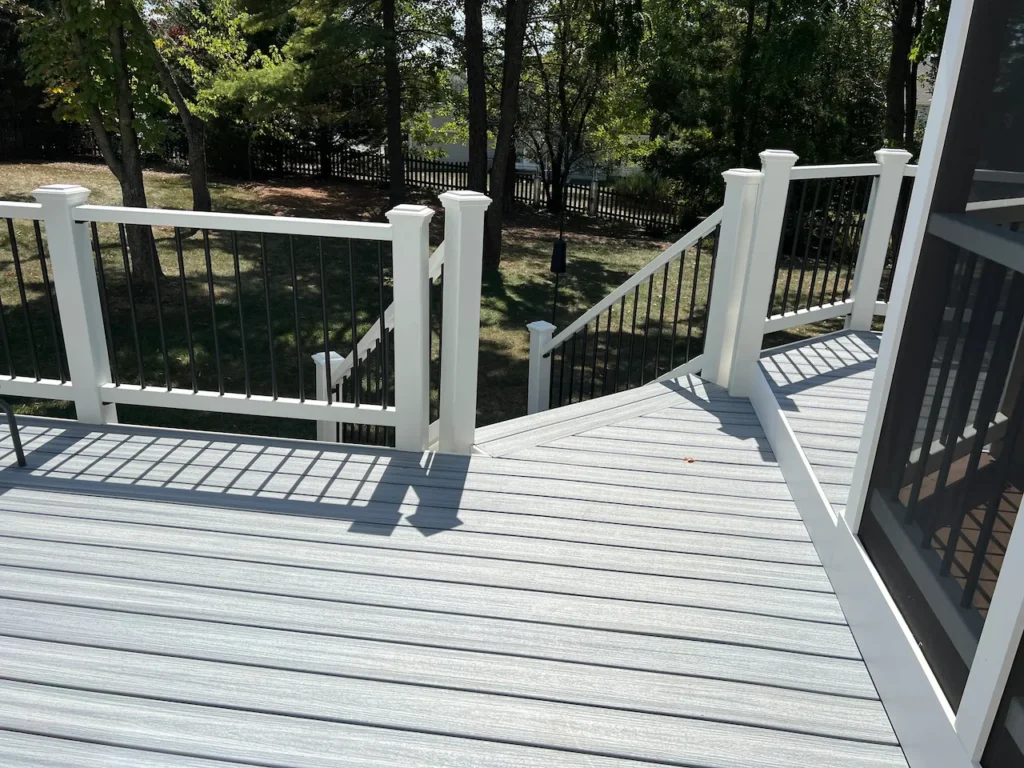
Can You Install Composite Decking Over Existing Wood Deck Boards?
Generally, installing composite decking directly over existing wood deck boards is not the same as replacing the boards while retaining the frame.
Placing new composite boards over old boards can create problems with fastening, drainage, ventilation, finished height, and inspection of the supporting structure. It may also conflict with the decking manufacturer’s instructions.
The more appropriate approach for a typical resurfacing project is to remove the existing decking, evaluate the exposed framing, make necessary repairs, and install the new boards according to the product requirements.
This process allows the contractor to assess the condition of the structure and verify that the new surface will have the support it needs.
There may be specialized systems or circumstances with different requirements, but homeowners should not assume that covering an existing deck is an acceptable shortcut.
When Should You Replace the Existing Deck Frame Instead?
Reusing the frame is not always the safest or most economical option. Extensive structural damage can make a full or partial rebuild more appropriate than resurfacing.
Consider more extensive replacement when an inspection identifies:
- Widespread rot affecting multiple joists, beams, or posts.
- A severely deteriorated or improperly secured ledger board.
- Significant movement or sagging throughout the structure.
- Damaged or unstable footings.
- Extensive corrosion or failure of structural connectors.
- Framing that cannot reasonably be modified to meet the selected decking requirements.
- Structural deficiencies that cannot be adequately corrected through localized repairs.
The condition of the stairs and railings also matters. Even when the main frame is sound, these components may require repair or replacement.
In some cases, replacing a handful of joists and reinforcing connections can preserve most of the existing structure. In others, extensive repairs may approach the cost of rebuilding. A professional evaluation helps clarify the available options.
Is Reusing Existing Deck Framing More Affordable?
Reusing sound framing can reduce the amount of demolition, lumber, labor, and disposal involved in a deck project. It may therefore be less expensive than removing and rebuilding the entire structure.
However, the final cost depends on several factors:
- The condition of the existing frame.
- The amount of joist reinforcement or replacement required.
- Whether beams, posts, footings, or the ledger need repairs.
- The type and quantity of composite decking selected.
- The fastening system and installation requirements.
- Whether stairs, railings, or other components also need replacement.
- Local permit requirements and inspection costs, when applicable.
A project that initially appears straightforward can become more involved once the old boards are removed. It is wise to leave room in the budget for repairs if concealed damage is discovered.
Benefits of Replacing Wood Deck Boards With Composite
When the frame is suitable, composite decking can offer several advantages over traditional wood boards.
Lower routine maintenance: Composite boards generally do not require the regular sanding, staining, and sealing associated with many wood decking products. Cleaning is still necessary, and product-specific care instructions should be followed.
Resistance to common wood problems: Quality composite decking is designed to resist many issues associated with traditional wood, including splintering and certain forms of moisture-related deterioration. Performance varies by product, and composite boards still require proper installation and drainage.
Consistent surface appearance: Composite boards are manufactured to provide a relatively consistent finish compared with natural wood, which can vary and weather over time.
An opportunity to address framing issues: Removing the old surface makes it possible to inspect and repair the underlying structure before installing new boards.
For a closer look at material differences, read DeckGuru’s blog, Composite vs. PVC Decking: Which Is Better for Your Home?. Homeowners considering a complete upgrade can also read Replacing Your Wood Deck With Composite Decking.
Make Sure Your Existing Deck Frame Is Ready for Composite Decking
So, can existing deck framing support composite decking? In many cases, it can, provided the joists, beams, posts, footings, and connections are in suitable condition and the framing meets the selected product’s requirements. Reusing a sound structure can make a composite deck upgrade more practical, but installing new boards over damaged or inadequately spaced framing can compromise the results.
Before committing to a project, have the existing structure evaluated, confirm the manufacturer’s installation requirements, and address any necessary repairs. If the frame is sound, you may be able to enjoy the benefits of composite decking without rebuilding the entire deck.
Contact DeckGuru today for a free estimate or call 703-982-0084 to discuss your existing deck and explore composite decking replacement options in Northern Virginia.
FAQ: Existing Deck Framing Support Composite Decking?
Can existing deck framing support composite decking?
Yes, provided the framing is structurally sound, properly attached, adequately spaced, and compatible with the manufacturer’s requirements. Damaged or unsuitable framing must be repaired or replaced before installation.
Do I need to replace all the joists when installing composite decking?
Not necessarily. If the existing joists are in good condition and meet the requirements for the new decking, they may be reusable. Some projects require additional joists, blocking, or selective replacement.
Can I install composite decking on 24-inch-on-center joists?
Not with many standard composite decking products. The required spacing depends on the specific product and installation direction. A contractor may be able to add joists to meet the manufacturer’s requirements.
Does composite decking need a perfectly level frame?
The framing must provide a consistent, properly aligned surface that meets the manufacturer’s installation requirements. Composite boards follow the contours of the supporting joists, so uneven framing can produce an uneven finished deck.
Is replacing deck boards cheaper than rebuilding a deck?
It often can be when the existing frame is sound. However, extensive structural repairs, required framing modifications, or damaged footings may increase the cost enough to make a larger replacement project worth considering.
How long does an existing deck frame last?
There is no single lifespan that applies to every deck frame. Lumber quality, moisture exposure, drainage, construction methods, maintenance, and local weather all affect durability. An inspection is more reliable than estimating remaining life based on age alone.
Should I hire a professional to inspect my deck before resurfacing?
A professional assessment is strongly recommended, particularly for an older deck, visible structural damage, excessive movement, or uncertain joist spacing. It helps identify problems before new decking is installed.