In today’s real estate market, outdoor living isn’t just a nice bonus. It’s one of the first things buyers notice. A well-maintained deck can make outdoor space feel like a functional extension of the home, while a visibly deteriorated or unsafe deck can become a concern during the buying process.
Rather than assuming that a deck replacement will automatically increase your sale price, homeowners should weigh the deck’s condition, safety, appearance, remaining useful life, and the expectations of buyers in their local market.
How Buyers See Your Deck
When potential buyers tour your home, the deck isn’t just a structure. It’s a vision. They’re picturing summer barbecues, family dinners, quiet morning coffee, and weekend unwinding. But if the boards are cracked, the railings are wobbly, or the stain is peeling, that dream starts to unravel.
Buyers may also notice signs of deferred maintenance, including deteriorated decking, damaged railings, unsafe stairs, or visible problems with the deck’s structure. Addressing these concerns before listing can help present the home as better maintained and reduce the number of obvious projects a buyer may need to consider.
In a competitive market like Northern Virginia, a tired or unsafe deck can:
- Replacing damaged or deteriorated decking boards
- Cleaning the deck according to the decking or stain manufacturer’s recommendations
- Refreshing a wood deck with an appropriate exterior stain or sealer when the existing finish and wood condition allow
- Repairing or replacing damaged railings and stair treads
- Replacing outdated skirting or lattice with a cleaner, updated design
A deck in good condition can reinforce the overall presentation of your home, while visible deterioration or safety concerns can become a negative during showings or inspections.
When a Repair Is Enough
Good news: You might not need a full rebuild. If the structure is solid, strategic upgrades can dramatically improve the look and feel of your deck and do it fast.
Before focusing on cosmetic improvements, however, the deck’s underlying structure should be evaluated. Issues involving the framing, ledger, beams, posts, footings, stairs, or structural connections may require more extensive work than replacing the surface boards.
Smart pre-sale repairs include:
- Replacing rotted or warped boards
- Cleaning wood or composite decking according to the decking or stain manufacturer’s recommendations
- Refreshing an existing wood deck with an appropriate exterior stain or sealer when the wood and existing finish are suitable for recoating
- Tightening or upgrading railings and stair treads
- Swapping outdated lattice for stylish skirting like faux stone or vertical panels
If the structure is sound, these targeted improvements may be a practical way to improve the appearance and usability of the deck without taking on the cost and timeline of a complete replacement.
When You Should Replace It
If your deck has structural issues such as rot in the framing, foundational damage, or code
violations, repair might not be enough. Full replacement could be the smarter move if:
- You’re listing a high-end home where finish quality matters
- The current deck looks outdated or doesn’t match your home’s style
- You want to attract modern buyers who value low-maintenance materials
- The existing deck has extensive deterioration that would require multiple major repairs
- You want a new decking system that requires less routine maintenance after installation
A replacement may also make sense when the existing deck’s structure, layout, or appearance limits what can realistically be improved through repairs.
Today’s buyers are drawn to features like:
- Composite decking with wood or metal railings
- Modern composite or PVC decking paired with coordinated railing systems
- Low-maintenance materials that reduce the need for routine staining, painting, and sealing
- Updated stairs, lighting, skirting, and other features that give the outdoor space a more finished appearance
Why Consider Trex or TimberTech?
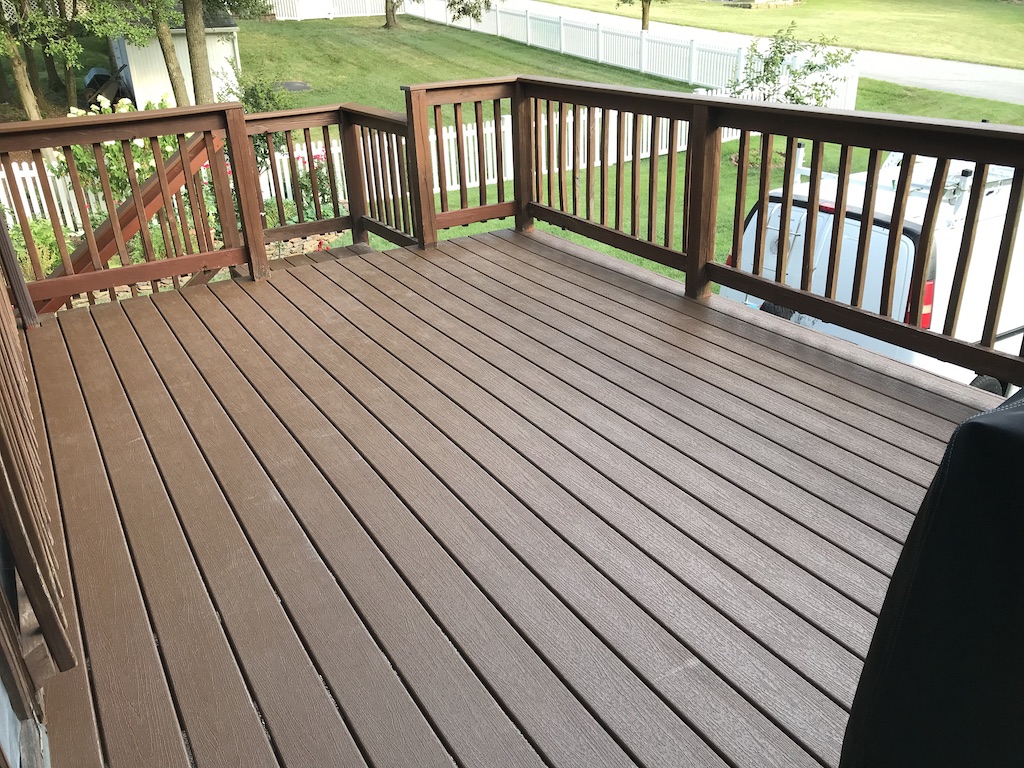
If replacement makes sense, composite and PVC decking can provide a lower-maintenance alternative to traditional wood. Trex’s current high-performance composite decking is designed to resist fading, staining, scratching, mold, mildew, and moisture-related deterioration while requiring less maintenance than traditional wood decking.
TimberTech also offers composite and PVC decking designed for low maintenance. Its Advanced PVC decking is engineered to resist moisture, fading, and everyday wear without the routine sanding, staining, and sealing associated with wood decking.
For homeowners preparing to sell, these characteristics can make a new deck easier to maintain and help create a clean, updated appearance. However, choosing composite or PVC decking should be based on the home’s design, budget, desired appearance, and how long you expect to remain in the property.
The DeckGuru Difference
When time is tight and your sale is on the line, you can’t afford guesswork. At DeckGuru, we
offer expert inspections to help you make the best decision fast.
Here’s what we bring to the table:
- Professional deck evaluations from top to bottom
- Honest guidance on whether to repair, resurface, or replace
- Solutions tailored to Northern Virginia homeowners and applicable building requirements
- Fast, high-quality service to meet your selling timeline
- Guidance on decking, railing, and design options when replacement is the better solution
Whether your deck needs a few targeted repairs or a complete replacement, evaluating the structure first can help you focus your budget on improvements that address the most important issues.
From composite colors to deck foundation design, DeckGuru can help you evaluate your options and plan a deck project that fits your property and goals.
Final Thoughts
Your deck can be the highlight of your listing or become a noticeable maintenance concern for potential buyers. Whether you need a few cosmetic upgrades or a complete rebuild, the right choice depends on the deck’s structural condition, appearance, maintenance needs, and your goals for the property.
If the underlying structure is sound, repairs and targeted improvements may be enough. If the deck has extensive deterioration or you want a significant long-term upgrade, replacement may make more sense.
Before listing your home, consider having your deck evaluated so you can identify significant safety, structural, or maintenance concerns before they become a larger issue during the selling process.
Selling your home this year? Let us inspect your deck and provide expert guidance.