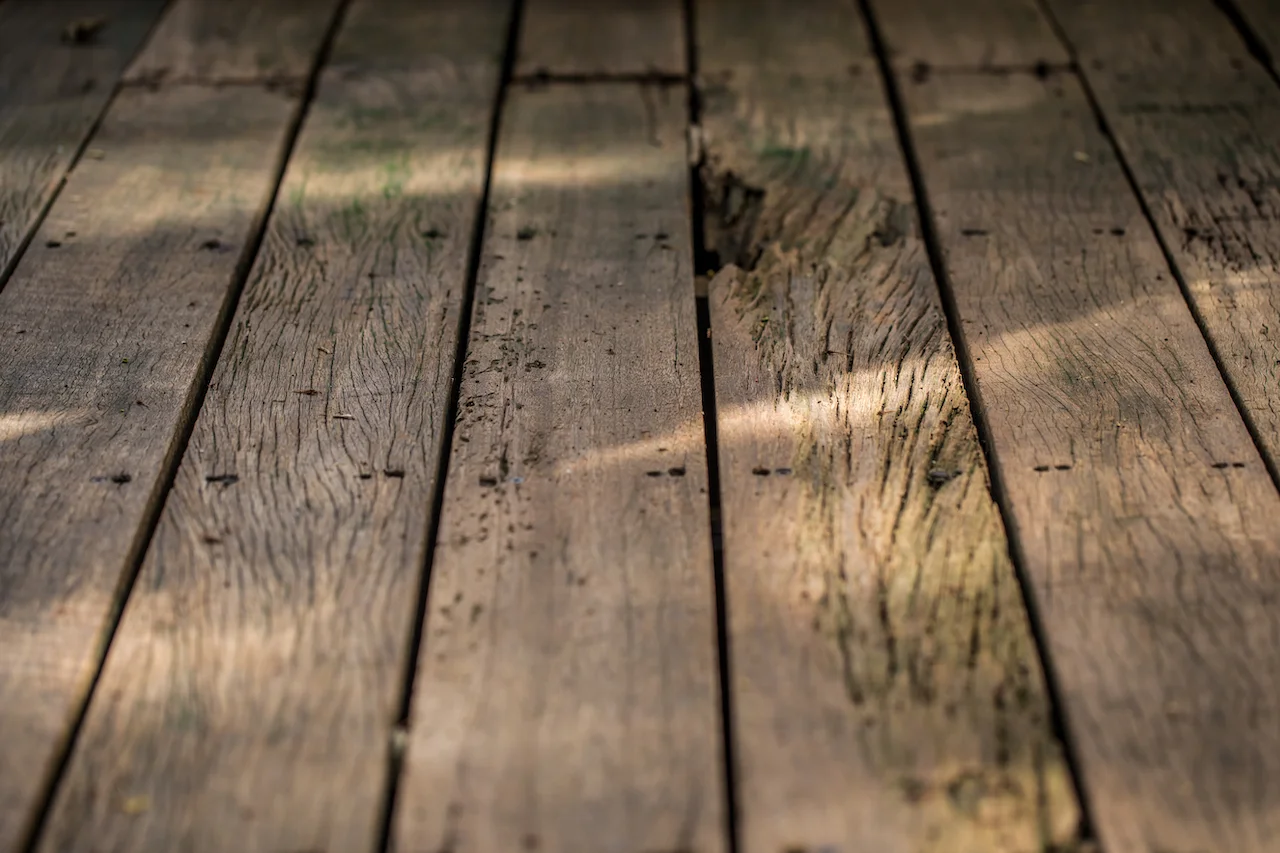
Knowing when a deck is unsafe to use can help protect your family, guests, and home from preventable accidents. While a few cracked boards might seem like minor maintenance issues, loose railings, rotting support posts, and deteriorating structural connections can signal more serious problems. Even a deck that looks attractive from above may have hidden damage underneath.
For homeowners in Northern Virginia, changing weather conditions, moisture, and years of outdoor use can gradually affect a deck’s condition. Recognizing the warning signs early can help you determine whether a simple repair is appropriate or whether you should stop using the structure until it has been professionally evaluated.
If you have noticed unusual movement, soft boards, or a railing that no longer feels secure, do not wait for the problem to get worse. Contact DeckGuru for a professional deck inspection to evaluate your deck’s condition and discuss the appropriate next steps.
Key Takeaways: Signs of an Unsafe Deck
If you are wondering when a deck becomes unsafe, pay close attention to these warning signs:
- Rotting or deteriorating wood: Soft, crumbling, or severely cracked boards and support members may indicate damage that affects structural integrity.
- Loose railings: Railings that wobble, pull away from posts, or have loose connections can create a serious fall hazard.
- Excessive movement: Unusual bouncing, swaying, or shifting may indicate problems with the framing or structural connections.
- Sagging or leaning components: Drooping beams, leaning posts, or a deck that appears to be pulling away from the house require prompt evaluation.
- Damaged stairs: Loose treads, unstable handrails, and uneven steps increase the risk of falls.
- Corroded hardware: Rusted connectors, missing fasteners, and deteriorated brackets can compromise important structural connections.
- Water damage: Persistent moisture, poor drainage, and deteriorating wood can accelerate structural decay.
- Cracked or splitting support members: Significant damage to joists, beams, or posts should never be dismissed as a cosmetic problem.
- A deteriorating ledger connection: Separation between an attached deck and the house can indicate a potentially serious structural hazard.
If you notice a major structural warning sign, keep people off the deck until it has been assessed by a qualified professional.
1. When Is a Deck Unsafe to Use Because of Wood Rot?
Wood rot is one of the most important signs of an unsafe deck. Moisture can contribute to decay, particularly where water collects, ventilation is limited, or protective finishes have deteriorated.
Inspect visible wooden components for:
- Soft or spongy areas that compress easily.
- Wood that crumbles or breaks apart.
- Deep cracks accompanied by deterioration.
- Discoloration associated with persistent moisture.
- Fungal growth or damaged areas around fasteners.
- Deterioration near posts, beams, joists, and the house connection.
Pay particular attention to structural components rather than focusing only on the deck boards. A damaged surface board may be replaceable without rebuilding the entire deck, but decay affecting a supporting joist, beam, or post can require more extensive work.
Also, remember that paint, stain, or a fresh coat of finish cannot restore wood that has lost its structural strength. If you suspect significant rot, avoid relying on the affected area for support and arrange a professional assessment.
For more information about maintaining wood surfaces, see DeckGuru’s guide to deck stain vs. sealer.
2. Loose or Unstable Railings Can Make a Deck Unsafe
Railings help prevent people from falling off elevated decks, making their stability essential to deck safety.
Warning signs include:
- Railings that wobble when touched.
- Posts that shift at their base.
- Loose or missing screws, bolts, or other fasteners.
- Railings pulling away from the deck framing.
- Split or rotting wood around railing attachments.
- Missing sections or damaged balusters that create gaps.
A railing may look intact while having a weak connection to the structure. For this reason, homeowners should pay attention to the attachment points, not just the appearance of the railing itself.
Do not lean against or place weight on a railing that appears unstable. Keep children and guests away from the affected area until the problem has been evaluated and corrected.
The American Wood Council’s residential deck construction guide provides technical guidance on deck framing, guardrails, guardrail posts, and structural connections.
3. Excessive Bouncing, Swaying, or Shifting
Some minor movement may occur in outdoor structures, but pronounced bouncing, swaying, or shifting should not be ignored.
If your deck feels noticeably less stable than it used to, possible causes include deteriorating framing, loose connections, damaged posts, or inadequate support. Movement may also become more apparent when several people gather in one area.
Watch for:
- A deck surface that noticeably flexes under normal foot traffic.
- Visible movement in posts or railings.
- A deck that shifts relative to the house.
- New creaking or cracking sounds accompanied by movement.
- Sections that appear to dip or move independently.
Sounds alone do not prove that a deck is unsafe. However, unusual noises combined with visible movement or structural damage warrant prompt attention.
Do not repeatedly jump on the deck or gather several people on it to test its stability. Such tests can increase risk without reliably identifying the cause of the problem.
4. Sagging Deck Boards, Beams, or Support Posts
A deck that appears uneven may have a problem that goes beyond aging surface boards.
Look across the deck for noticeable dips, slopes, or sections that appear to be pulling away from their original position. From a safe location, examine visible beams and posts for leaning, bowing, splitting, or other deterioration.
Potential warning signs include:
- A beam that appears to sag in the middle.
- Posts that lean or show signs of movement.
- Deck boards that dip noticeably in one area.
- A deck surface that has developed a new or worsening slope.
- Connections that appear separated or displaced.
- Visible movement around the bases of support posts.
These symptoms can result from several different issues, including deteriorated lumber, shifting footings, or failed connections. A visual check alone cannot establish the precise cause or determine the structure’s remaining capacity.
If sagging or leaning is substantial, keep the deck unoccupied until a qualified professional evaluates it. Do not attempt to straighten a structural component or add temporary supports without appropriate guidance.
5. Damaged Deck Stairs and Unstable Handrails
Deck safety includes the stairs leading to the yard, patio, or another level of the home. A structurally sound deck can still pose a hazard if its stairs are deteriorating.
Check for:
- Loose or cracked stair treads.
- Rotting stringers, which support the stair treads.
- Uneven or shifting steps.
- Missing or loose handrails.
- Broken connections between stairs and the deck.
- Steps that collect water or become unusually slippery.
Stair problems can be especially dangerous in wet or icy conditions. Uneven steps may also increase the risk of tripping, particularly when visibility is limited.
Avoid using a staircase with loose treads, unstable handrails, or visibly damaged supports. If the stairs are the only way onto or off the deck, keep the deck closed to occupants until a safe access route and appropriate repairs have been established.
Depending on the damage, a contractor may be able to replace individual treads, repair connections, or rebuild the stairs without replacing the entire deck.
6. Rusted Hardware, Missing Fasteners, or Failed Connections
Decks rely on connections between joists, beams, posts, railings, and the house. Bolts, screws, brackets, joist hangers, and other hardware help these components work together.
Over time, moisture and exposure to the elements can contribute to corrosion. Missing or loose fasteners may also indicate deterioration or an earlier installation problem.
During a visual inspection, look for:
- Heavily rusted connectors.
- Missing bolts or screws.
- Loose metal brackets.
- Joist hangers that appear bent or detached.
- Wood splitting around fasteners.
- Gaps between connected structural members.
Not every rust spot indicates a structural emergency. The location, severity, type of hardware, and condition of the surrounding wood all matter. However, corrosion or missing fasteners at a major load-bearing connection deserves professional attention.
Do not assume that adding a few screws will resolve a connection problem. The correct repair depends on the structural detail, materials, and applicable building requirements.
The International Code Council’s guide to safe deck connections explains why proper ledger attachment and fastening details matter.
7. Water Damage Around the House Connection
The ledger board is the structural member that attaches many decks to a house. Because this connection helps transfer loads between the deck and the building, deterioration in this area can be particularly concerning.
Water can enter around an improperly flashed connection or remain trapped where the ledger meets the house. Over time, moisture may contribute to decay in the ledger or the adjacent house framing.
Warning signs include:
- Soft or deteriorating wood near the ledger.
- Visible gaps between the deck and the house.
- Missing, damaged, or poorly installed flashing.
- Water stains or signs of persistent moisture.
- Corroded fasteners or loose connections.
- A deck that appears to be pulling away from the building.
Do not attempt to confirm the strength of the connection by pulling on the deck or adding weight to it. If separation, substantial deterioration, or other major connection problems are visible, keep people off the deck and seek a professional evaluation.
A contractor can determine whether the problem involves flashing, localized wood damage, fasteners, or a more extensive structural failure.
8. Splintering, Cracked, or Loose Deck Boards
Surface damage is not always evidence that the entire deck is structurally unsafe, but it can still create injury risks and sometimes signal deeper problems.
Inspect the walking surface for:
- Large cracks or severely split boards.
- Raised nails or screws.
- Loose boards that move underfoot.
- Deep splinters.
- Holes or areas where wood has broken away.
- Soft spots that may indicate hidden deterioration.
A loose board can cause someone to trip, while raised fasteners and splinters can injure bare feet. Damage that exposes the framing to more moisture may also accelerate deterioration.
The important distinction is whether the problem is limited to replaceable decking or extends into the supporting structure. Removing old boards and evaluating the framing can help determine the appropriate solution.
If the framing remains sound, replacing damaged boards or resurfacing the deck may be sufficient. DeckGuru explains this restoration-first approach in its article about deck restoration and replacement.
For homeowners considering composite materials, the article Can Existing Deck Framing Support Composite Decking? explains why the condition and spacing of the underlying framing matter.
9. Your Deck Is Aging, but You Cannot See the Structural Damage
Age alone does not automatically make a deck unsafe. A well-maintained deck may remain serviceable for many years, while a newer deck can develop serious problems if it was poorly constructed, exposed to persistent moisture, or inadequately maintained.
The challenge is that some of the most important components are difficult to inspect without professional knowledge or access.
The framing beneath the decking, the ledger connection, post bases, footings, and concealed fasteners may all require closer evaluation. Surface boards can sometimes look acceptable even when hidden structural components have deteriorated.
Consider arranging a deck safety inspection if:
- Your deck is older and has not been evaluated in years.
- You have noticed new movement, sagging, or unusual sounds.
- Previous repairs have not resolved recurring problems.
- The structure has experienced prolonged moisture exposure.
- You plan to replace the surface boards and want to reuse the frame.
- You are unsure whether railings, stairs, or structural connections are secure.
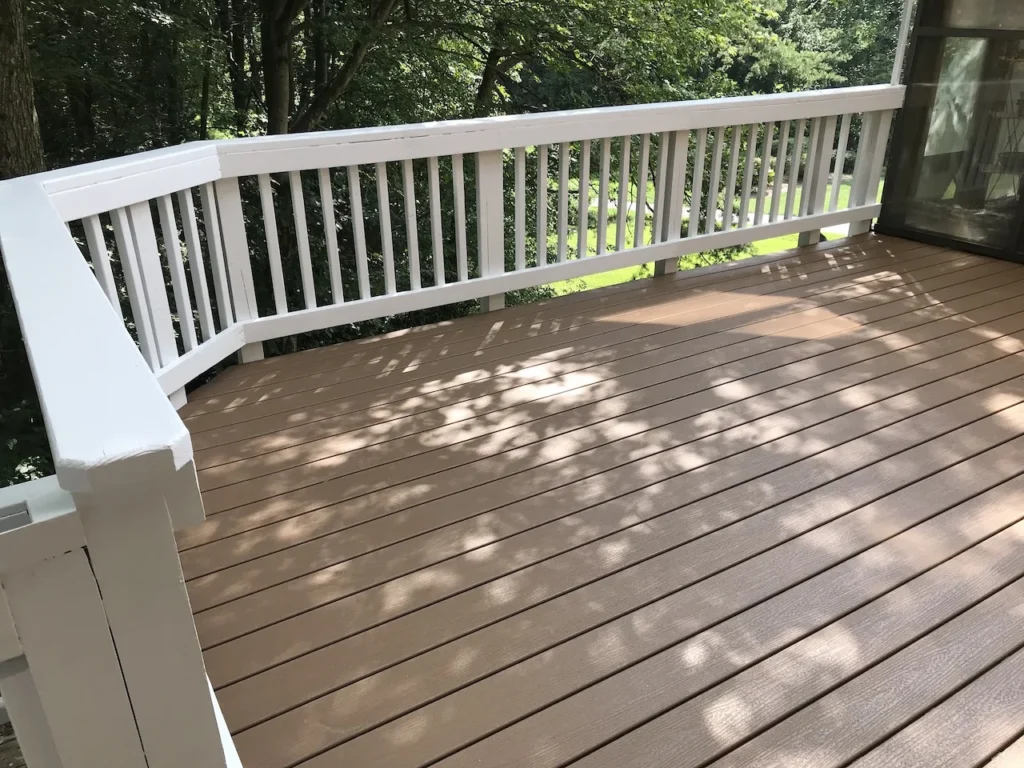
What to Do If Your Deck Is Unsafe to Use
If you notice signs of a potentially unsafe deck, the safest approach is to limit access and arrange an appropriate evaluation rather than attempting to diagnose the structure through trial and error.
Follow these steps:
- Stop using the affected area. If you see substantial sagging, separation, unstable supports, or other serious structural concerns, keep everyone off the deck.
- Keep children and guests away. Do not allow anyone to lean on unstable railings, walk across damaged boards, or use compromised stairs.
- Avoid temporary fixes that conceal the problem. Paint, stain, surface patches, and a few extra screws cannot correct every structural deficiency.
- Document visible concerns from a safe location. Photographs may help you describe the problem to a contractor, but do not climb underneath an unstable deck or enter an unsafe area to take them.
- Schedule a professional inspection. A qualified professional can assess the deck’s visible condition and determine whether additional investigation or structural expertise is needed.
- Follow recommendations before reopening the deck. Keep the structure closed until identified safety concerns have been appropriately addressed.
If the deck appears close to collapse or is actively separating from the house, keep clear of the structure and contact the appropriate local emergency or building-safety authority for guidance.
Should You Repair or Replace an Unsafe Deck?
Discovering a safety issue does not necessarily mean you need to replace your entire deck. The right solution depends on the location, extent, and cause of the damage.
When Deck Repairs May Be Enough
Localized repairs may be appropriate when the underlying structure is sound and the damage is limited to specific components. Examples include replacing isolated damaged boards, repairing certain railing sections, or addressing a limited number of deteriorated framing members when a professional determines that repair is suitable.
When Deck Replacement May Be Necessary
More extensive work may be appropriate if the deck has widespread structural rot, compromised footings, multiple failing support members, a seriously deteriorated ledger connection, or extensive damage that cannot reasonably be corrected through localized repairs.
A replacement may also make sense when the existing structure cannot be brought into suitable condition without substantial reconstruction.
Why a Professional Inspection Matters
The surface appearance of a deck cannot reliably tell you whether its framing is sound. A professional assessment can help identify the underlying cause of the damage and clarify whether repair, partial rebuilding, resurfacing, or full replacement is appropriate. For additional guidance, see The Hidden Costs of Delaying Your Deck Repairs in Northern VA.
How to Help Keep Your Deck Safe
Regular maintenance can help homeowners identify developing problems before they become more serious. While maintenance cannot eliminate every risk, it can help protect the structure and extend the useful life of a well-built deck.
Use this checklist as part of your routine:
- Inspect the walking surface for cracks, loose boards, splinters, and raised fasteners.
- Look for soft or deteriorating wood around visible structural components.
- Check railings and stairs for visible damage or loose connections without placing weight on suspect areas.
- Keep gutters and drainage systems working so water does not repeatedly collect around the deck.
- Remove leaves and debris that trap moisture against wood.
- Maintain wood finishes according to the product manufacturer’s instructions.
- Pay attention to new movement, sagging, separation, or unusual changes in the structure.
- Schedule a professional inspection when you notice concerning symptoms or are unsure about the deck’s condition.
For more information on deck materials and maintenance, explore DeckGuru’s blog.
Know When a Deck Is Unsafe to Use
Understanding when a deck is unsafe to use starts with recognizing warning signs such as wood rot, loose railings, unstable stairs, excessive movement, sagging supports, and deteriorating structural connections. While some surface problems can be corrected with straightforward repairs, damage affecting the framing or the connection to your home can pose a much more serious risk.
Do not wait for a loose railing to fail or a small area of deterioration to spread. If your deck shows signs of structural damage, restrict access and arrange a professional assessment before using it again. A timely inspection can help you understand the condition of your deck and make an informed decision about repairs or replacement.
Ready to find out whether your deck is safe? Contact DeckGuru today to discuss a professional deck inspection and your options for restoring or replacing your deck in Northern Virginia.
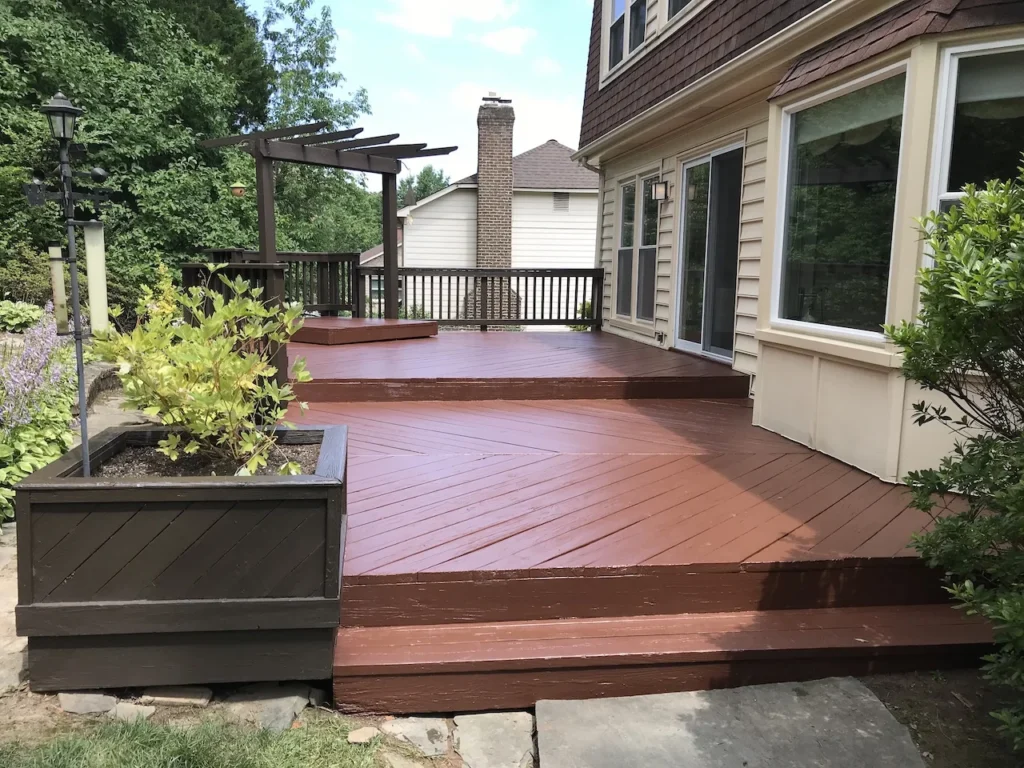
FAQ: When a Deck Is Unsafe to Use
1. When is a deck unsafe to use?
A deck may be unsafe when it has rotting support posts, loose railings, unstable stairs, sagging beams, excessive movement, or damaged connections to the house. If you notice serious structural warning signs, keep everyone off the deck until a qualified professional evaluates it.
2. Can a deck collapse without warning?
Yes. A deck can collapse with little visible warning if critical structural components or connections fail. Hidden rot, corroded fasteners, and deteriorating ledger connections may weaken a deck before the damage becomes obvious. Regular inspections can help identify potential problems early.
3. How do I know if my deck has structural damage?
Look for sagging areas, leaning posts, loose railings, cracked support beams, soft or rotting wood, and gaps where the deck connects to your home. Unusual bouncing or shifting may also indicate a problem. Avoid testing a suspected weakness by adding weight, and arrange a professional inspection.
4. Should I repair or replace an unsafe deck?
The decision depends on the extent of the damage. Localized problems, such as a few damaged deck boards or a loose railing, may be repairable if the underlying structure is sound. Widespread rot, failing supports, or extensive connection problems may require significant reconstruction or full replacement.
5. How often should I have my deck inspected?
Check your deck regularly for visible damage, especially after severe weather and before periods of heavy use. Consider a professional deck inspection if your deck is aging, has not been inspected in years, or shows signs of deterioration. Promptly addressing problems can help maintain safety and extend the life of your deck.
6. What should I do if I think my deck is unsafe?
Stop using the deck if you notice serious structural concerns, and keep children, guests, and pets away. Do not attempt to repair major structural damage yourself or test the deck by placing additional weight on it. Contact a qualified deck professional to evaluate the structure and recommend appropriate repairs or replacement.
7. Can an old deck still be safe to use?
Yes. Age alone does not determine whether a deck is safe. A well-maintained deck may remain in good condition for many years, while a newer deck can develop problems due to moisture, poor construction, or inadequate maintenance. The condition of the framing, supports, fasteners, and connections is more important than age alone.
8. Who should I contact for a deck safety inspection in Northern Virginia?
Homeowners in Northern Virginia who notice loose railings, rotting boards, sagging supports, or other warning signs should arrange an evaluation by a qualified deck professional. DeckGuru can help homeowners assess their deck’s condition and explore appropriate repair or replacement options. Visit the DeckGuru contact page to discuss your project.