How long does a deck replacement take? For many homeowners, the answer is just a few days of on-site work, but the exact timeline depends on the deck’s size, existing structural condition, replacement materials, and project requirements. Replacing worn deck boards and railings on a sound existing frame is usually much faster than tearing down and rebuilding an entire deck. Understanding the process helps you prepare for construction, anticipate potential delays, and get back to enjoying your outdoor space sooner.
At Deck Guru, we specialize in professional deck replacement in Northern Virginia, helping homeowners restore aging outdoor spaces without unnecessary reconstruction. Whether your deck needs new boards, updated railings, or more extensive repairs, our experienced technicians can assess the existing structure and recommend the appropriate next steps. Ready to get started? Contact Deck Guru today to request a free estimate and discuss your deck replacement timeline.
How Long Does a Deck Replacement Take on Average?
A typical deck replacement timeline varies depending on whether you’re replacing surface materials or rebuilding the entire structure.
For a straightforward project involving new decking and railings over structurally sound framing, the on-site work may take approximately 2–5 working days. Larger projects, extensive repairs, and structural replacements can take considerably longer.
For general planning purposes, homeowners can consider the following illustrative estimates:
| Project Type | Estimated On-Site Timeline |
| Small deck board replacement | 1–3 working days |
| Standard deck resurfacing with railing replacement | 2–5 working days |
| Larger composite deck replacement | 5–10 working days |
| Replacement requiring substantial framing repairs | 1–2 weeks or longer |
| Complete deck demolition and reconstruction | 2–4 weeks or longer |
These estimates are broad planning ranges, not guaranteed Deck Guru completion times. They describe potential on-site work and exclude contractor scheduling, permitting, HOA approvals, material lead times, and inspection-related delays.
The most reliable way to understand your particular schedule is to have a qualified contractor evaluate the deck before beginning work.
Deck Resurfacing vs. Full Deck Replacement
One reason deck replacement timelines vary so widely is that homeowners use the term “replacement” to describe different types of projects.
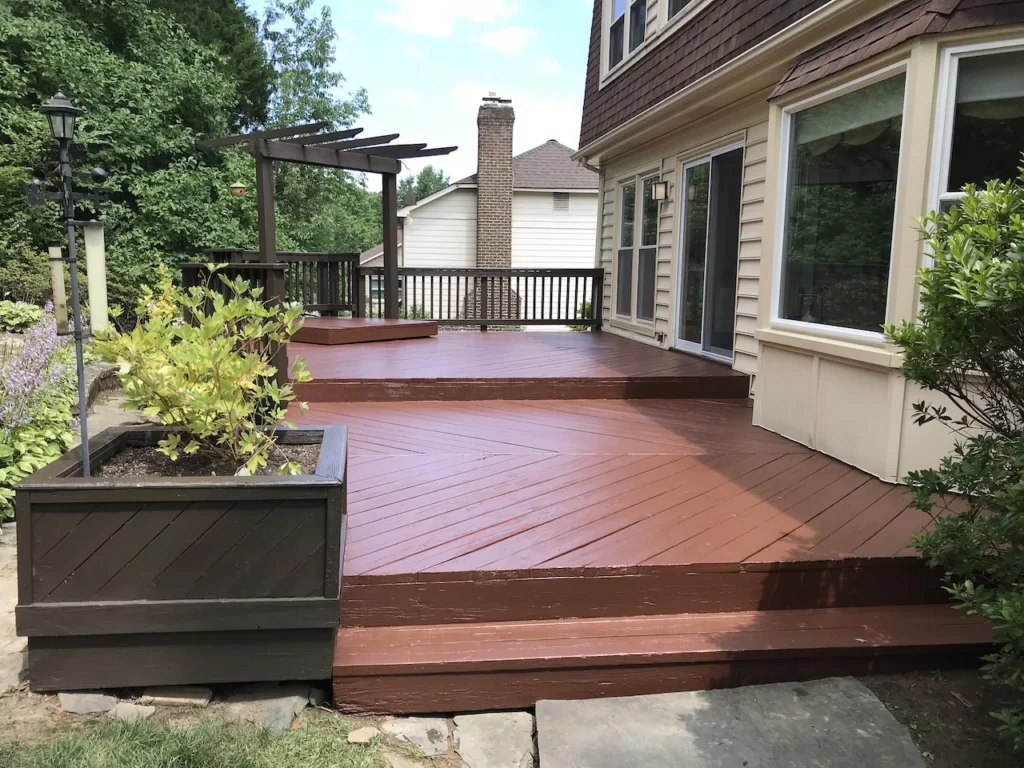
Deck resurfacing generally involves removing existing deck boards, inspecting the framing, addressing any necessary repairs, and installing new decking. Railings and stairs may also be replaced.
A full deck rebuild involves removing and reconstructing substantial structural components, potentially including posts, beams, joists, and footings.
If your current structure is sound, keeping the framing can reduce demolition, material requirements, and installation time.
However, resurfacing is only appropriate when the existing supports and connections meet the necessary structural and manufacturer requirements.
To understand the difference, read our article on when to repair vs. replace your deck.
The Deck Replacement Process: A Step-by-Step Timeline
Knowing what happens during the deck replacement process makes it easier to understand where the time goes.
Although individual projects vary, most replacements involve an initial assessment, removal of deteriorated materials, evaluation of the exposed structure, installation, and final checks.
Step 1: Deck Inspection and Project Assessment
Estimated time: Often one appointment, with any additional evaluations scheduled as needed.
Before replacing decking materials, a professional should assess the condition of the existing structure.
This helps determine whether the deck is a good candidate for resurfacing or requires more extensive structural work.
During the assessment, a contractor may examine:
- Existing deck boards for rot, cracks, and deterioration
- Joists and beams for moisture damage or structural weakness
- Posts, footings, and support connections
- Ledger attachment to the home
- Railings and stairs for stability
- Fasteners, corrosion, and other safety concerns
- Whether the framing is compatible with the proposed replacement materials
Not all structural problems are visible during the initial assessment. Some become apparent only after the old decking has been removed.
An early inspection is one of the best ways to reduce unexpected changes during a replacement project.
Step 2: Removing Old Deck Boards and Railings
Estimated time: Approximately 1–2 working days for many straightforward projects.
Once work begins, technicians remove the existing decking materials that are being replaced.
Depending on the project scope, this may include deck boards, railings, stair treads, and damaged trim.
Careful demolition is particularly important when the original framing will remain in place.
The crew must remove worn materials without unnecessarily damaging usable structural components.
Old fasteners, nails, and other debris also need to be managed safely throughout the project.
Removing the existing decking exposes the underlying framing and allows the team to conduct a closer assessment.
This is an important stage because concealed problems can affect both the deck replacement cost and the completion schedule.
Step 3: Evaluating and Repairing Existing Framing
Estimated time: Several hours to multiple days, depending on the repairs required.
After the old decking is removed, the condition of the remaining structure becomes easier to evaluate.
A structurally sound frame may need only minor preparation before new boards are installed.
However, damaged joists, deteriorated connections, or other problems may require repairs.
When installing composite materials, framing spacing, support, fastening requirements, and overall condition must be compatible with the selected product.
As explained in our article on whether existing deck framing can support composite decking, retaining old framing is possible in many situations, but it should never be assumed that every deck is suitable.
Unexpected structural damage is one of the most common reasons a seemingly simple project takes longer than anticipated.
Addressing these problems before installing new decking helps prevent unsafe construction and costly future repairs.
Step 4: Installing New Decking Materials
Estimated time: Approximately 1–4 working days for many standard resurfacing projects.
Once the underlying structure is ready, technicians begin installing the replacement deck boards.
The installation schedule depends on the deck’s square footage, material requirements, fastening system, and accessibility.
For homeowners seeking a lower-maintenance surface, composite deck replacement is a popular option.
Composite decking typically requires less routine maintenance than conventional wood decking. However, proper installation remains essential.
Installers must follow manufacturer specifications regarding board spacing, fasteners, ventilation, and structural support.
Wood decking is another option, although certain finishing products require additional preparation, application, and drying time.
The installation process should never be rushed at the expense of proper fastening or long-term performance.
Step 5: Replacing Deck Railings and Stairs
Estimated time: Approximately 1–3 working days, depending on project scope.
Many homeowners replace their railings and stair components at the same time as their deck boards.
This can improve the safety and functionality of the finished structure while avoiding the disruption of another separate project.
The timeline depends on the number of railing sections, stair runs, structural connections, and material specifications.
Replacing basic railing sections is usually faster than extensive stair reconstruction.
Railings must be securely installed and meet applicable safety requirements.
Damaged or unstable railings should never be treated as merely cosmetic concerns.
If you have noticed wobbling railings, deteriorated stairs, or other warning signs, our guide to identifying an unsafe deck explains when professional evaluation is necessary.
Step 6: Final Checks, Cleanup, and Project Completion
Estimated time: Several hours to a day for many projects, excluding inspection scheduling delays.
After the new decking and railings are installed, the team completes the remaining checks and cleanup.
This may include:
- Checking board placement and fastening
- Confirming railing and stair stability
- Addressing any remaining installation details
- Removing construction debris
- Reviewing the completed work with the homeowner
- Coordinating required inspections, where applicable
A project should not be considered ready for normal use until all necessary work and approvals have been completed.
For deck replacements involving permits, the final inspection schedule can affect when the deck is officially ready to use.
What Factors Affect the Deck Replacement Timeline?
Even when two decks have similar dimensions, their replacement schedules may be different.
Understanding the most common variables helps homeowners set realistic expectations and avoid unnecessary frustration.
1. Deck Size and Accessibility
Larger decks require more materials, demolition, installation, and cleanup.
A compact ground-level deck may be simpler to work on than an elevated deck with limited access.
Tight backyards, steep slopes, and obstacles around the work area can also slow material handling and construction.
Clear access allows technicians to move materials and equipment more efficiently.
2. Existing Structural Condition
The condition of the deck’s framing is one of the biggest influences on the timeline.
When joists, beams, posts, and connections are structurally sound, a resurfacing project can often proceed relatively quickly.
If rot, sagging, or other serious problems are discovered, those areas must be properly addressed before installation continues.
This may involve obtaining additional materials, revising the scope of work, or completing inspections.
A professional evaluation before construction can identify many issues, but it cannot guarantee that concealed damage will not be found.
3. Decking Materials and Availability
Material selection also affects how long a deck replacement takes.
Common replacement materials include pressure-treated wood and composite decking.
Standard, readily available products can simplify procurement, while special-order components may require additional lead time.
Composite deck replacement may also involve specific fastening systems and support requirements.
Homeowners should confirm product availability before scheduling the start of construction.
4. Weather Conditions in Northern Virginia
Northern Virginia weather can influence exterior construction throughout the year.
Heavy rain, snow, icy conditions, and extreme temperatures may interrupt work or create unsafe conditions for technicians.
Wet materials and unsuitable weather can also interfere with certain coatings and finishing products.
A contractor may need to pause construction until conditions allow the work to continue safely.
Keeping flexibility in your schedule is particularly helpful during periods of unpredictable weather.
5. Permits and Local Inspections
Permits can add time to the overall deck replacement process, especially when structural changes are involved.
Requirements vary by locality and the specific work being performed.
For example, Prince William County’s residential deck guidance identifies building permits for deck construction, structural alterations, and guardrail replacement.
Loudoun County’s deck inspection guidance describes required footing, framing, and final inspections for applicable projects.
Homeowners in Fairfax County can also review the county’s permit requirements to understand which projects require approval.
Simple repairs and more extensive structural replacements may be treated differently. Always verify the current requirements for your property before work begins.
Permitting and inspection delays may extend the total project calendar even when the actual on-site construction takes only a few days.
How Long Does It Take to Replace Deck Boards With Composite Decking?
Homeowners often ask, “How long does it take to replace deck boards?” when considering an upgrade from aging wood to composite materials.
If the existing frame is suitable for continued use, replacing worn wood boards with composite decking can often be completed within several working days.
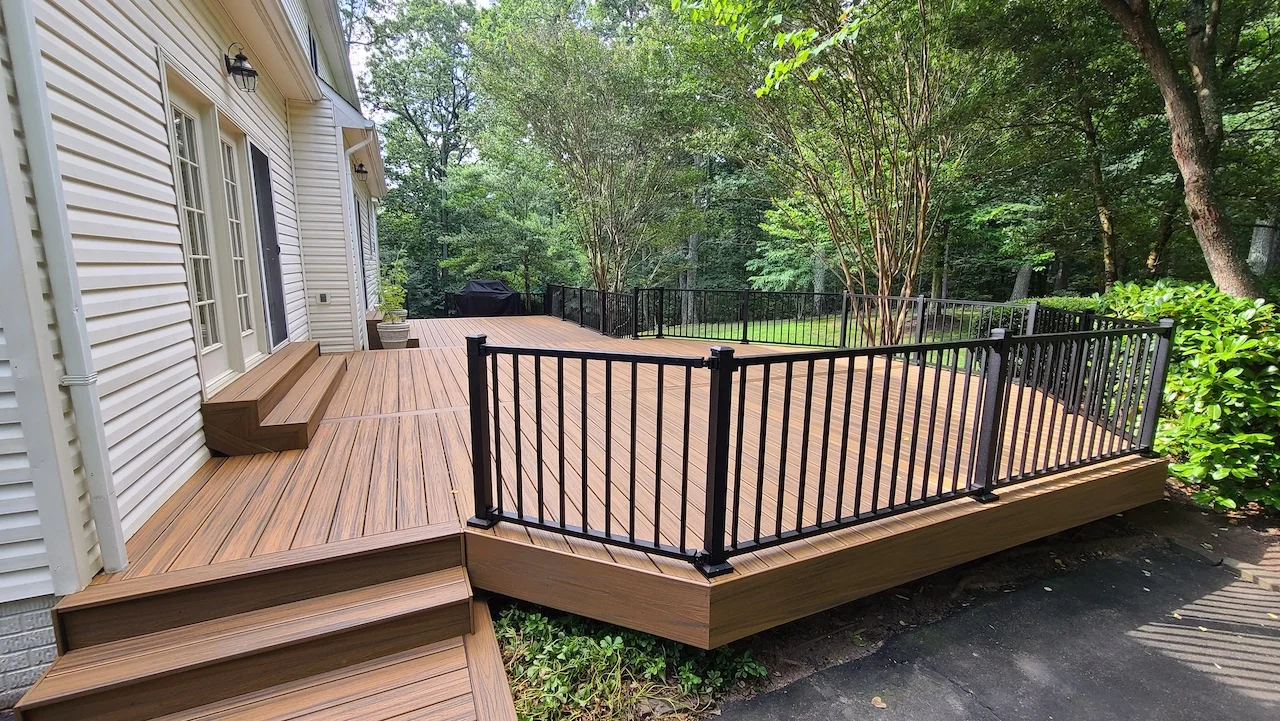
A typical composite deck replacement involves removing old boards, inspecting the exposed frame, making necessary repairs, and installing new composite boards and compatible railings.
Composite materials do not eliminate the need for careful structural evaluation.
However, once properly installed, composite decking generally requires less routine upkeep than traditional wood, which can reduce future maintenance demands.
Learn more about when to replace a wood deck with Trex to determine whether this upgrade makes sense for your existing deck.
How Much Does Deck Replacement Cost?
The deck replacement cost and project timeline are closely connected.
Larger projects generally require more labor and materials. Structural repairs, railing replacement, and more extensive demolition can also increase both the schedule and budget.
The final price depends on factors such as:
- Total deck square footage
- Amount of material being removed
- Condition of existing framing
- Wood or composite decking selection
- Number and type of railings
- Stair replacement requirements
- Accessibility of the work area
- Permits and inspection requirements
Deck resurfacing may be more economical than a complete rebuild when the existing structure can safely remain in place.
However, replacing boards over a damaged frame is not an appropriate way to save money.
For more budgeting information, explore our guide on getting the most out of your deck replacement budget.
How to Prepare for a Deck Replacement and Avoid Delays
Although some delays are unavoidable, homeowners can take practical steps to make their projects run more smoothly.
Here are a few ways to prepare:
- Schedule an assessment early. Allow time for a professional to review the deck’s condition and identify potential problems.
- Clear the deck. Remove furniture, planters, grills, and personal belongings before work begins.
- Provide access. Make sure the crew can safely reach the deck and bring materials into the backyard.
- Discuss material availability. Confirm whether the necessary decking and railing products are available.
- Address permits and HOA requirements. Determine whether approvals are needed before construction starts.
- Prepare for unexpected repairs. Leave some flexibility in your budget and schedule in case concealed damage is discovered.
- Keep children and pets away. Construction areas may contain exposed framing, tools, fasteners, and other hazards.
- Confirm your completion expectations. Ask when the crew expects to finish, whether inspections are required, and when the deck can safely be used.
Good preparation cannot eliminate every delay, but it can help prevent avoidable interruptions.
For homeowners planning deck replacement in Northern Virginia, working with an experienced local contractor can also make it easier to understand weather considerations, permitting requirements, and the condition of older decks.
What Is the Best Time of Year for Deck Replacement in Northern Virginia?
Deck replacement can be performed during much of the year, provided weather and site conditions are appropriate.
Spring and fall often bring relatively comfortable outdoor working conditions, although contractor availability may vary.
Summer is a popular season for outdoor projects, which can make advance scheduling especially helpful.
Winter replacements may also be possible when temperatures, precipitation, and ground conditions permit safe installation.
Rather than choosing a season based only on temperature, homeowners should consider their target completion date.
If you want your deck ready for summer gatherings, it is wise to arrange an assessment well before your first planned event.
This provides time for scheduling, material procurement, any necessary approvals, and unexpected structural repairs.
FAQ: Deck Replacement
Can a Deck Be Replaced in One Day?
A small, straightforward board replacement may sometimes be completed in one day. However, projects involving multiple boards, railings, structural evaluation, or other repairs often require additional time. A full deck replacement should not be assumed to be a one-day project.
How Long Does It Take to Replace Deck Boards and Railings?
Replacing deck boards and railings on a standard-sized deck with sound framing can often take approximately two to five working days. Deck Guru notes that a typical 14-by-16-foot deck can have its decking and railings replaced with composite materials in just a few days under suitable conditions.
Do I Need to Leave My Home During Deck Replacement?
Most homeowners can remain in their homes during deck replacement. However, the deck and surrounding construction area should be kept off-limits. Noise, debris, and temporary access restrictions are normal during the project.
Does Composite Deck Replacement Take Longer Than Wood?
Not necessarily. Both materials require proper installation, and the timeline depends on framing condition, product availability, and project complexity. Composite decking has specific fastening and spacing requirements, while wood projects may involve additional finishing steps.
Can You Replace Deck Boards Without Replacing the Frame?
Yes, when the existing frame is structurally sound and compatible with the new decking materials. A professional should evaluate the joists, beams, posts, footings, and connections before approving the structure for reuse.
What Happens if Rot Is Found During Deck Replacement?
If rot or other structural damage is uncovered, the affected components must be evaluated and appropriately repaired or replaced before construction proceeds. This can increase both the project duration and total cost.
How Far in Advance Should I Schedule Deck Replacement?
Scheduling several weeks or more before your desired completion date can provide flexibility for contractor availability, materials, and approvals. Larger projects or those requiring permits may need more lead time. Actual availability should always be confirmed with the contractor.