
Your deck railing does more than provide a place to grip, it can define the look, feel, safety, and functionality of your entire outdoor space. With so many deck railing materials available today, choosing between cable, composite, and aluminum can feel overwhelming.
At DeckGuru, we help Northern Virginia homeowners find practical ways to improve their decks without automatically resorting to a costly tear-down and rebuild.
Whether you’re upgrading an existing railing or giving your entire deck a fresh new look, our experienced team can help you find an option that fits your home, lifestyle, and budget. Call DeckGuru at 866-814-8188 or schedule your appointment online to get started with a stress-free estimate.
Cable vs. Composite vs. Aluminum Deck Railings: What’s the Difference?
When comparing cable vs. composite vs. aluminum deck railings, there isn’t one material that’s automatically best for every homeowner.
Each option has a different visual style and performance profile:
- Cable deck railings provide a sleek appearance with minimal visual obstruction.
- Composite deck railings offer a traditional-to-contemporary appearance with low maintenance and numerous design options.
- Aluminum deck railings provide a clean, modern look with a durable, lightweight construction.
Your decision should account for more than appearance. Think about maintenance, durability, the view from your deck, the architectural style of your home, your budget, and the rest of your decking materials.
DeckGuru has previously covered different deck railing ideas and the many styles available to Northern Virginia homeowners. This comparison focuses specifically on three popular deck railing options to help you narrow down your choice.
Cable Deck Railing: Sleek and View-Friendly
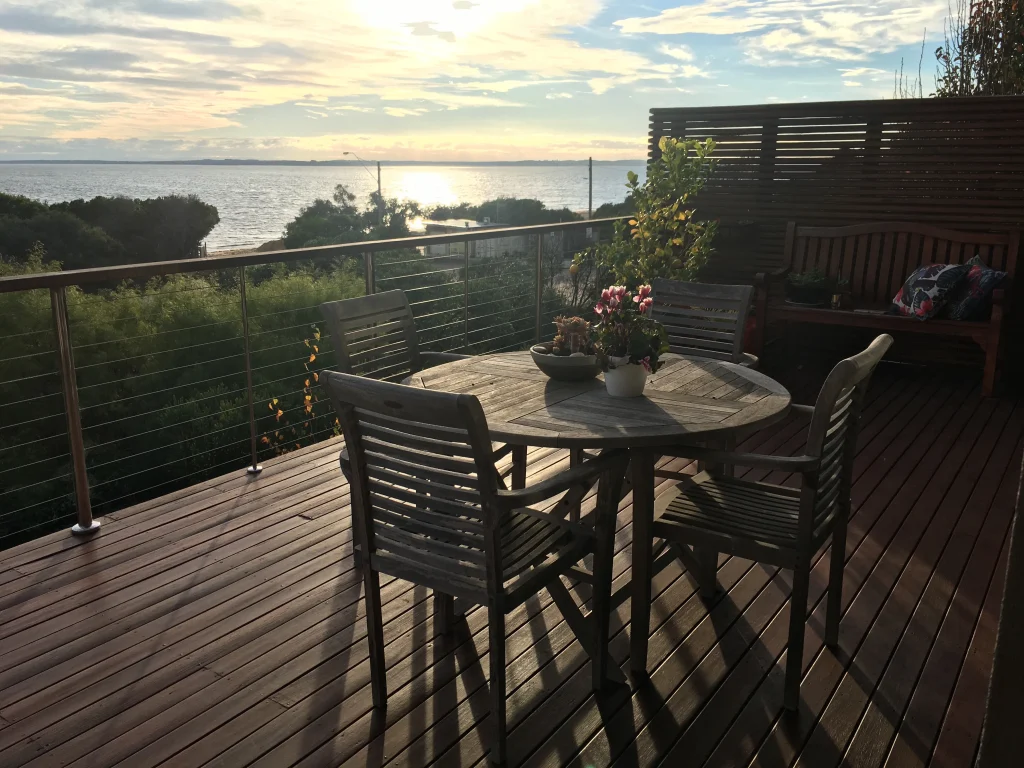
Cable deck railing systems use horizontal metal cables stretched between posts and rails. Because the cables are relatively thin compared with traditional balusters, they can create an open appearance without completely enclosing the deck.
This makes cable railing especially appealing for homeowners who want to maintain a view of their backyard or surrounding landscape.
Benefits of Cable Deck Railing
One of the biggest advantages of cable railing is its appearance.
Cable systems can complement modern and contemporary homes particularly well, but they can also work with traditional homes when paired with the right decking and post materials.
Other benefits include:
- Minimal visual obstruction
- Contemporary appearance
- Excellent visibility
- Flexible design combinations
- Works well with wood and composite decking
- Can make smaller spaces feel more open
Cable railing is particularly useful when your deck overlooks a wooded property, open backyard, pool, or other feature you don’t want to hide behind a wall of vertical balusters.
Potential Drawbacks of Cable Deck Railing
Cable railing isn’t completely maintenance-free.
The cables need to remain properly tensioned, and the system should be inspected periodically. Dirt and debris can also accumulate around components over time.
Installation can also be more involved than a basic railing system because the cables need to be installed and tensioned correctly.
For that reason, professional installation is especially important when selecting cable deck railing.

Composite Deck Railing: Low Maintenance and Versatile
Composite deck railing is a popular option for homeowners who want a finished appearance without the ongoing maintenance associated with painted or stained wood.
Composite railing systems can be designed in a variety of colors and styles, making them versatile enough for traditional, transitional, and contemporary homes.
DeckGuru already recommends composite materials for many deck upgrades, and the company has extensive experience with Trex railing systems. Its guide to choosing composite deck railing covers several Trex railing options and considerations.
Benefits of Composite Deck Railing
One of the biggest reasons homeowners choose composite railing is reduced maintenance.
Unlike traditional wood railing, composite materials generally don’t require routine staining or painting to maintain their appearance.
Other benefits include:
- Low-maintenance ownership
- Multiple color choices
- Numerous style options
- Consistent appearance
- Good resistance to common outdoor wear
- Pairs well with composite decking
- Can create a classic or modern appearance depending on the design
Composite railing is also a good choice when you want your deck and railing to have a coordinated appearance.
Potential Drawbacks of Composite Deck Railing
Composite railing can have a more substantial appearance than cable or minimalist aluminum systems.
If your primary goal is to preserve a wide-open view, the additional visual elements may not be ideal.
Composite systems can also cost more upfront than some basic railing configurations, although the long-term maintenance requirements can make them attractive to homeowners who don’t want to regularly paint, stain, or repair wood railing.
Aluminum Deck Railing: Modern and Durable
Aluminum deck railing is another popular low-maintenance option.
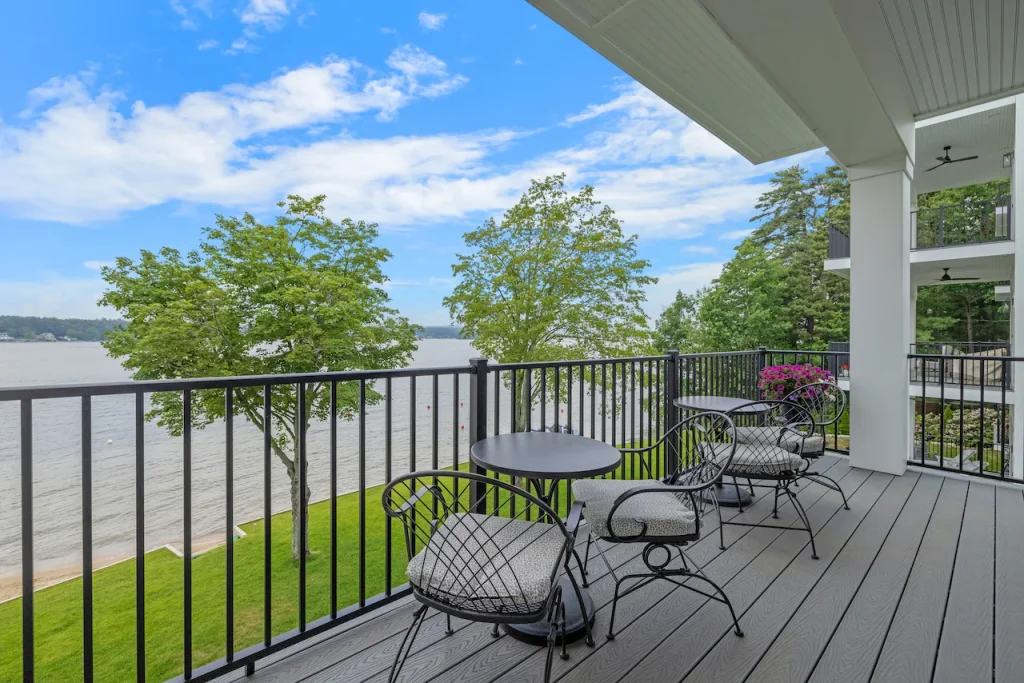
Aluminum is lightweight and resistant to rust and corrosion, making it well suited to outdoor applications. Powder-coated finishes can also provide a clean appearance in a variety of colors.
Aluminum railing is often used in modern deck designs, but its versatility means it can complement many different architectural styles.
Benefits of Aluminum Deck Railing
Homeowners often choose aluminum deck railing because it provides a combination of durability and low maintenance.
Advantages include:
- Lightweight construction
- Resistance to rust
- Low maintenance
- Sleek appearance
- Multiple color options
- Good durability
- Works well with composite decking
- Can preserve more of the view than bulky railing systems
Aluminum can also be combined with other materials. For example, some railing systems use aluminum posts and rails with cable or glass infill.
Potential Drawbacks of Aluminum Deck Railing
Aluminum doesn’t provide the same visual warmth as natural wood.
Some homeowners may also prefer the more substantial appearance of composite railing, especially on a traditional home.
Additionally, the final appearance and performance depend heavily on the specific railing system, finish, hardware, and installation.
Cable vs. Composite vs. Aluminum Deck Railings: Side-by-Side Comparison
The easiest way to compare these deck railing materials is to look at what matters most to homeowners.
| Feature | Cable | Composite | Aluminum |
| Appearance | Sleek and minimalist | Versatile and substantial | Modern and clean |
| View preservation | Excellent | Moderate | Very good |
| Maintenance | Low to moderate | Low | Low |
| Color options | Moderate | Many | Many |
| Traditional appearance | Moderate | Excellent | Moderate |
| Modern appearance | Excellent | Excellent | Excellent |
| Wood-like appearance | No | Some systems | No |
| Durability | High with proper installation | High | High |
| Best for low maintenance | Good | Excellent | Excellent |
| Best for open views | Excellent | Good | Excellent |
| Pairs with composite decking | Yes | Excellent | Excellent |
The important thing to remember is that these are general characteristics. Specific railing systems can vary considerably in design, materials, warranties, and maintenance requirements.
Which Deck Railing Is Best for Preserving Your View?
If preserving your view is your top priority, cable deck railing and aluminum deck railing are strong options to consider.
Cable systems have very thin horizontal lines, which can visually disappear when you’re looking beyond the railing.
Minimalist aluminum systems can also provide excellent visibility, particularly when they use narrow pickets or other streamlined designs.
Composite railing can still work well for a view-oriented deck, but its larger posts and balusters may create more visual interruption.
This is one reason it’s helpful to look at the railing from the position where you’ll actually use your deck—not just from a catalog or product sample.
Which Deck Railing Is Easiest to Maintain?
If minimizing maintenance is your primary concern, composite deck railing and aluminum deck railing are both strong choices.
Wood railings typically require more regular maintenance because outdoor exposure can lead to fading, cracking, splintering, and deterioration.
Composite and aluminum eliminate many of those concerns.
Cable railing is also relatively low maintenance, but homeowners should periodically inspect the cables and hardware to make sure the system remains secure and properly tensioned.
A low-maintenance railing doesn’t mean a maintenance-free railing. All outdoor structures should be inspected periodically for damage, loose connections, and other issues.
Which Railing Works Best With Composite Decking?
Composite decking pairs particularly well with both composite and aluminum railing systems.
A composite-on-composite combination can create a cohesive appearance, especially when you coordinate colors between the deck boards, posts, rails, and trim.
Aluminum can create more contrast. For example, a dark aluminum railing against lighter composite decking can create a clean, contemporary appearance.
Cable railing can also work exceptionally well with composite decking when the goal is to create a modern deck with minimal visual obstruction.

How Much Does Deck Railing Material Matter to Project Cost?
When budgeting for a deck project, it’s important to remember that railing is a significant part of the overall design.
The final cost of deck railing options depends on factors such as:
- Total linear feet of railing
- Number of corners and sections
- Deck and stair configuration
- Material
- Railing system
- Infill type
- Custom features
- Removal of an existing railing
- Installation complexity
A cable railing system, for example, requires specialized hardware and careful cable tensioning. Composite systems may have different component requirements, while aluminum systems can vary significantly based on the design and finish.
Rather than choosing a railing based solely on the lowest initial price, consider the total value over the life of the deck, including maintenance and potential repairs.
Don’t Forget Deck Railing Safety and Building Codes
A railing needs to look good, but safety should always come first.
The International Residential Code generally requires guards on open-sided walking surfaces when they are more than 30 inches above the floor or grade below. The IRC also specifies a 36-inch minimum guard height for most residential applications and limits openings so a 4-inch sphere generally cannot pass through them.
However, local requirements can vary, so homeowners should verify the requirements that apply to their property before beginning construction.
NADRA provides resources for deck and railing codes and standards, including information related to the International Residential Code.
DeckGuru’s own deck railing height guide provides additional information about railing height, spacing, and safety considerations.
Why Professional Railing Installation Matters
Even an excellent railing system can create problems if it isn’t installed correctly.
Common issues can include:
- Loose posts
- Improper spacing
- Incorrect fasteners
- Inadequate structural connections
- Improper cable tension
- Failure to follow manufacturer installation instructions
How to Choose the Right Deck Railing Materials
Still trying to decide between cable vs. composite vs. aluminum deck railings?
Start by answering a few basic questions.
Do You Want to Preserve Your View?
If your deck overlooks something you’d like to keep visible, prioritize cable or a streamlined aluminum system.
Do You Want Minimal Maintenance?
Composite and aluminum are excellent options when you want to spend less time painting, staining, or maintaining your railing.
Do You Want a Modern Look?
Cable and aluminum are natural choices for contemporary designs. Composite can also create a modern appearance depending on the color, profile, and configuration.
Do You Want a Traditional Look?
Composite railing generally provides more flexibility for creating a traditional or substantial railing appearance.
Are You Upgrading an Existing Deck?
You may not need to replace your entire deck to improve its appearance.
DeckGuru specializes in restoration and upgrades that can help homeowners get more life from an existing structure. Depending on its condition, your deck may be a candidate for deck restoration, resurfacing, wood replacement, or a composite upgrade.
Can You Replace Just the Deck Railing?
Yes, in many situations, homeowners can replace an existing railing without completely rebuilding the deck.
However, the existing structure needs to be evaluated first.
The railing posts and their connections transfer loads to the deck structure, so simply removing an old railing and attaching a new system isn’t always straightforward.
If your deck has loose railings, deteriorating boards, or other signs of damage, DeckGuru can evaluate the structure and determine the appropriate next step.
Upgrade Your Deck With the Right Railing
Choosing between cable vs. composite vs. aluminum deck railings ultimately comes down to how you want your outdoor space to look, function, and perform over time. Cable railing can maximize views and create a minimalist appearance, composite railing provides versatility and low maintenance, and aluminum railing offers a durable, streamlined solution.
The best deck railing materials are the ones that fit your home’s architecture, your maintenance preferences, your budget, and the way you use your deck.
At DeckGuru, we understand that homeowners don’t always need to tear down an existing deck to create a better outdoor space. Our team can evaluate your current deck and help determine whether a railing replacement, restoration, resurfacing, or composite upgrade makes the most sense.
If you’re ready to explore your deck railing options, contact DeckGuru or call 866-814-8188 to schedule an estimate and take the next step toward a safer, more functional outdoor living space.
Cable vs. Composite vs. Aluminum Deck Railings FAQs
What is the best deck railing material?
There isn’t one best option for every deck. Cable deck railing is excellent for preserving views, composite deck railing is a strong choice for low maintenance and design flexibility, and aluminum deck railing offers a lightweight, durable, modern option.
Is cable railing better than composite railing?
It depends on your priorities. Cable railing is generally better when maintaining an open view is important. Composite railing may be preferable if you want a more substantial appearance, more traditional styling, or a railing that coordinates closely with composite decking.
Is aluminum railing better than cable railing?
Neither is universally better. Aluminum can provide excellent durability and a clean appearance, while cable railing minimizes visual obstruction. Your home’s style, deck layout, and priorities should determine which is the better fit.
What is the lowest-maintenance deck railing?
Composite and aluminum are among the most attractive choices for homeowners seeking low-maintenance deck railing options. Cable railing can also require relatively little maintenance but should be periodically inspected for cable tension and hardware condition.
Which deck railing is best for a modern home?
Cable and aluminum are both excellent choices for modern homes because their streamlined profiles complement contemporary architecture. Composite railing can also create a modern look when paired with clean lines and complementary colors.
Can I install cable, composite, or aluminum railing on an existing deck?
In many cases, yes. However, the existing deck needs to be evaluated to determine whether the structure and attachment points can support the new railing system. A professional inspection can help identify any necessary repairs before installation.