
Dogs bring plenty of life to a backyard, but their claws, muddy paws, and frequent trips outdoors can take a toll on a deck. If your outdoor space gets regular use from four-legged family members, choosing the best decking for dogs and pets means looking beyond appearance. You need a surface that can handle daily activity, resist moisture and stains, remain comfortable underfoot, and be easy to maintain.
Composite decking is a popular option for pet owners because many products offer protective surface layers, reduced maintenance requirements, and resistance to common forms of weather-related wear. However, not every decking product performs the same way, and no material is completely immune to scratches or heat. Understanding the differences can help you choose a surface that works for your household.
Whether your existing deck needs an upgrade or you are considering replacing worn boards, DeckGuru can help you explore durable decking options for your home. contact DeckGuru for a free estimate and find out how our team can help you enjoy a more durable, lower-maintenance outdoor space.
Best Decking for Dogs and Pets: What Should You Look For?
The right pet-friendly decking should balance durability, comfort, maintenance, and long-term value. Before choosing a material, consider how your pets actually use the deck.
For example, a large dog that frequently runs across the boards may create different challenges than a small dog that primarily rests outdoors. Multiple pets can also mean more dirt, water, shedding, and routine cleanup.
When comparing the best decking for dogs and pets, evaluate these five factors:
- Scratch resistance: Look for decking with a durable protective surface designed to resist everyday wear from claws and outdoor activity.
- Splinter resistance: A smooth, well-maintained walking surface can help reduce the risk of splinters in paws.
- Moisture resistance: Consider how the material handles rain, wet paws, spilled water, and repeated exposure to moisture.
- Ease of cleaning: Select a surface that can be cleaned according to the manufacturer’s recommendations without extensive maintenance.
- Surface temperature: Decking exposed to direct sunlight can become hot, so consider the material, color, sun exposure, and your pet’s comfort.
It is also important to inspect the deck’s structural condition. Durable boards cannot compensate for loose railings, unstable stairs, damaged framing, or gaps that could create hazards for pets.
Is Composite Decking the Best Decking for Dogs and Pets?
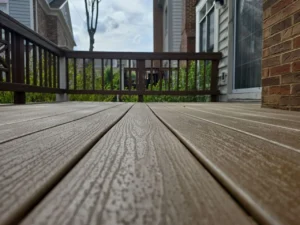
For many households, composite decking is an excellent starting point when comparing pet-friendly decking materials. Composite boards typically combine wood fibers and plastic, and many modern products feature a protective outer shell that helps resist stains, fading, moisture, and surface wear.
DeckGuru installs Trex composite decking, giving homeowners an option that reduces many of the maintenance demands associated with traditional wood.
Benefits of Dog-Friendly Composite Decking
1. Reduced maintenance
Dogs can track mud, grass, leaves, and other debris onto a deck throughout the year. Composite decking generally does not require the routine sanding, staining, and sealing associated with many wood decks.
You will still need to sweep and wash the surface periodically, but regular maintenance is typically more straightforward. For additional guidance, see DeckGuru’s article on how to clean a composite deck.
2. Protective surfaces
Some composite decking lines feature capped surfaces engineered to help resist scratching and staining. This can be beneficial when dogs frequently cross the same areas, play with toys, or move furniture around during everyday use.
However, scratch resistance varies by product. Even premium composite boards can develop marks, and repeated claw contact may eventually leave visible wear. Review the manufacturer’s specifications and warranty before choosing a particular board.
3. Resistance to moisture-related problems
Wet paws, spilled water, and rainy weather are regular parts of life with pets. Composite decking is designed to resist many moisture-related problems that affect wood, including rot and deterioration.
That does not mean dirt, standing water, or organic debris can be ignored. Routine cleaning and proper drainage remain important for keeping the deck in good condition.
4. Fewer splinter concerns
Wood boards can crack, split, or develop splinters as they age and weather. Many composite products avoid the same splintering concerns associated with deteriorating wood, although damaged boards and exposed edges still need attention.
For homeowners who want a lower-maintenance alternative to traditional lumber, composite decking can be a practical choice.

Are All Composite Decking Products Equally Pet-Friendly?
No. Composite decking products differ in construction, surface texture, scratch resistance, heat performance, and warranty coverage.
When comparing products, ask about:
- The type of protective cap or surface layer.
- Published scratch-resistance information.
- Recommended cleaning products and methods.
- Warranty coverage and exclusions.
- Heat performance in direct sunlight.
- Manufacturer guidance on expected wear.
DeckGuru’s guide to composite versus PVC decking explains additional differences between these two low-maintenance materials.
Composite vs. Wood Decking for Dogs
Traditional wood and composite decking can both work in a pet-friendly backyard, but they have different maintenance requirements and potential drawbacks.
Pressure-Treated Wood
Pressure-treated wood is often attractive to homeowners who want a lower initial material cost. It can provide a functional deck surface, but outdoor exposure and regular pet activity mean that ongoing maintenance matters.
Wood boards can weather, crack, splinter, and absorb moisture. Dogs that run across the surface may also contribute to visible wear over time.
Homeowners choosing wood should inspect boards regularly, address damaged areas promptly, and follow appropriate manufacturer guidance for cleaning and finishing.
Composite Decking
Composite decking generally costs more upfront than basic pressure-treated lumber, but it can reduce ongoing maintenance requirements.
Its benefits may include:
- Less need for routine staining and sealing.
- Protective surfaces available on many product lines.
- Resistance to rot and moisture-related deterioration.
- Easier routine cleanup.
- Consistent performance when properly installed and maintained.
The right choice depends on your budget, expectations, and willingness to maintain the surface over time.
For a closer comparison, read DeckGuru’s guide to Trex composite decking versus pressure-treated wood.
What Is the Best Scratch-Resistant Decking for Dogs?
Scratching is a common concern for pet owners, especially those with large dogs or pets that frequently sprint, turn, and play on the deck.
If scratch resistance is a priority, compare the specifications of individual decking lines rather than assuming all composite products perform identically.
Trex offers several decking collections with different surface characteristics. Its official decking product information describes differences in durability and scratch resistance, including the company’s most scratch-resistant product line.
When selecting decking for dogs, consider the following:
- Surface protection: Capped products may offer additional resistance to everyday wear.
- Expected activity: A high-energy dog that runs and pivots frequently may put more wear on the surface than a dog that mainly lounges outdoors.
- Warranty details: Check what the manufacturer covers and whether scratches, abrasions, or normal wear are excluded.
- Cleaning practices: Grit, sand, and debris can contribute to abrasion, so sweeping regularly is worthwhile.
- Product-specific performance: Ask for specifications on the exact boards being considered.
Keep expectations realistic. Scratch-resistant does not mean scratch-proof. Even durable decking can show wear from sharp claws, heavy furniture, abrasive debris, or repeated friction.
Does Composite Decking Get Too Hot for Dogs?
Surface temperature deserves special attention when choosing the best decking for dogs and pets. Dogs walk directly on the deck with their paw pads, which can be injured by excessive heat.
Composite decking can become hot in direct sunlight, just like other outdoor surfaces. The actual temperature depends on factors such as the product, color, sun exposure, air temperature, and surrounding conditions.
Some manufacturers offer products designed to reduce heat buildup. For example, Trex identifies heat-mitigating technology in certain decking collections, but these products can still become hot during warm weather.
To help protect your pet:
- Check the deck surface with your hand before allowing your dog to spend time on it.
- Provide access to shade and fresh drinking water.
- Limit outdoor activity during the hottest parts of the day.
- Watch for excessive panting, restlessness, or attempts to move onto cooler surfaces.
- Give your dog access to a cooler indoor area when needed.
The American Kennel Club offers additional advice about protecting dogs from hot outdoor surfaces.
Remember that no decking material guarantees a paw-safe temperature in every weather condition. Monitor the actual surface rather than relying on air temperature alone.

How to Keep Pet-Friendly Decking Clean
Even the best decking for dogs and pets needs regular care. Dirt, fur, mud, food, and water can accumulate quickly when pets use the deck every day.
Fortunately, a simple cleaning routine can help protect the surface and maintain its appearance.
Follow These Deck Maintenance Steps
1. Sweep regularly. Remove fur, leaves, dirt, and grit before they build up or get tracked across the boards.
2. Clean muddy paw prints promptly. Use water and an appropriate cleaning solution recommended by the decking manufacturer.
3. Address spills quickly. Food, drool, and other residue can leave marks if they remain on the surface for extended periods.
4. Inspect the boards. Look for scratches, loose fasteners, splinters, cracked boards, and other signs of wear.
5. Check drainage. Make sure water can drain appropriately and that debris is not collecting between boards or against the structure.
6. Follow product-specific instructions. Some decking products tolerate certain cleaning methods that others do not. Avoid abrasive tools or harsh chemicals unless the manufacturer specifically approves them.
Trex provides detailed composite decking care and cleaning instructions for its different product lines. Following the guidance for your specific decking helps avoid unnecessary damage.
For homeowners with older wood decks, DeckGuru’s guide to deck stain versus sealer can also help explain the upkeep associated with wood surfaces.
Pet Safety Considerations Beyond Decking Material
Choosing durable decking is only one part of creating a safer place for pets to spend time outdoors. The condition of the entire deck matters.
Pay attention to these potential hazards:
- Loose boards: Unstable boards can shift under a pet’s weight and may create trip hazards.
- Splinters and exposed fasteners: Damaged wood and protruding screws or nails can injure paws.
- Railings and gaps: Check that railings are secure and that openings do not create a risk of pets slipping through or becoming trapped.
- Stairs and transitions: Make sure steps are stable and accessible for pets of different sizes and mobility levels.
- Standing water: Remove debris that interferes with drainage and address persistent moisture issues.
- Heat exposure: Provide shade and monitor surface temperatures during warm weather.
Dogs should also be supervised on elevated decks, particularly when they are young, elderly, excitable, or unfamiliar with the space.
If you notice soft framing, loose railings, significant rot, or structural movement, have the deck evaluated rather than relying on new surface boards to solve the problem.
Should You Replace an Existing Deck With Pet-Friendly Composite Decking?
If your current deck has become difficult to maintain, replacing the surface with composite boards may be worth considering.
A complete teardown is not always necessary. Depending on the deck’s construction and condition, the existing framing may be suitable for reuse. However, that determination requires an inspection.
Before replacing the decking, a professional should evaluate:
- The condition of the joists, posts, footings, and ledger connection.
- Whether the framing meets the requirements of the selected decking system.
- Signs of rot, insect damage, or structural deterioration.
- The condition of existing fasteners and connections.
- Whether any necessary repairs should be completed before installation.
DeckGuru takes a restoration-first approach when evaluating existing decks. Depending on the structure’s condition, replacing the surface and addressing necessary repairs may be an alternative to rebuilding the entire deck.
Learn more about replacing an existing wood deck with composite decking.
Choose the Best Decking for Dogs and Pets
The best decking for dogs and pets should balance scratch resistance, durability, paw comfort, and easy maintenance. Composite decking is worth considering for homeowners who want a lower-maintenance surface that can stand up to everyday outdoor activity, but product specifications and proper care still matter.
Before making a decision, compare individual decking lines, review warranty details, consider heat exposure, and inspect the condition of your existing deck. These steps can help you choose a material that suits your pets and your long-term maintenance goals.
DeckGuru helps homeowners throughout Northern Virginia restore and upgrade their decks with durable materials, including Trex composite decking. If your existing deck is worn, difficult to maintain, or no longer suitable for your household, contact DeckGuru for a free estimate and to discuss your decking replacement or restoration options.

FAQ: Best Decking for Dogs and Pets
What is the best decking material for dogs?
Composite decking is a strong option for many pet owners because it can offer low-maintenance care, resistance to moisture, and protective surfaces designed to resist everyday wear. The best product depends on your priorities, your dog’s activity level, and the decking’s specific performance characteristics.
Does composite decking scratch from dog claws?
Yes, composite decking can scratch. Some products offer greater scratch resistance than others, but no decking should be considered completely scratch-proof. Compare manufacturer specifications and warranty terms before choosing a product.
Is composite decking safe for dog paws?
Many composite products provide a stable surface with fewer splinter concerns than deteriorating wood. However, surface damage, gaps, loose boards, and excessive heat can still pose risks. Inspect the deck regularly and check its temperature during hot weather.
Is composite decking better than wood for pets?
Composite decking often requires less ongoing maintenance and can resist moisture-related deterioration better than traditional wood. Wood may have a lower initial cost, but it can require more frequent maintenance and inspection for cracks and splinters.
How do you clean dog urine off composite decking?
Follow the decking manufacturer’s cleaning instructions. In general, remove residue promptly, rinse the affected area, and use an approved soap-and-water cleaning method when appropriate. Avoid unapproved chemicals that could damage the surface or affect the warranty.
Does composite decking get hot in summer?
Yes. Composite decking can heat up in direct sunlight, and darker surfaces may become particularly hot. Some products incorporate heat-mitigating technology, but shade, water, and limiting outdoor activity during extreme heat remain important for pet comfort.
Can I install composite decking over my existing deck frame?
Possibly. The existing framing must be structurally sound and compatible with the installation requirements of the selected decking product. A professional inspection can identify repairs or replacement work needed before installation.