When it comes to decking, you have the deck, railing, and deck features. The railing is an essential component, providing safety and also beauty to your outdoor space. If you’re looking for deck railing ideas, you’ve come to the right place! In this article, we’ll outline the different types of Trex railings we provide at DeckGuru and offer some tips and advice to help you make an informed decision.
Today’s deck railing systems offer homeowners considerably more choices than traditional wood balusters. Current Trex and TimberTech railing collections include composite, aluminum, steel, PVC, vinyl, glass, mesh, and other infill configurations, allowing you to balance appearance, maintenance, durability, and budget when designing your deck.
Types of Deck Railings
While our opinion of the best replacement deck material is composite, when it comes to your deck’s railing, there is more you can do to create a beautiful, functional, and durable railing.
Wood Deck Railing
Wood railings are a popular choice because they offer both safety and natural beauty to your deck. Each piece has its unique pattern, coloration, and characteristics that add a natural feel to your outdoor space. They can be an excellent complement to wood decking, composite decking, or even stone.
The tradeoff is maintenance. Unlike many modern composite, PVC, and metal railing systems, wood railing typically requires ongoing care such as staining, painting, or sealing to maintain its appearance and protect it from the elements.
Vinyl and Composite Deck Railing
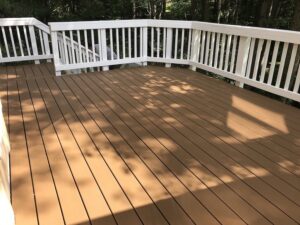
Vinyl and composite railings are known for their low maintenance, durability, and variety of color options. They can be paired well with wood decks, composite decking, and even stone or tile. They’re an ideal choice for homeowners who want a low-maintenance solution with a clean appearance that won’t overshadow their vibrant composite decking.
Today’s manufacturer offerings make this category even broader. TimberTech currently offers both composite and premium vinyl railing, with its composite collections designed to resist cracking, splitting, moisture, mold, mildew, and rot. TimberTech’s vinyl railing options are also designed for low maintenance and easy cleaning.
Trex also offers composite railing systems, including Transcend and Select, as well as other railing materials and configurations. Trex describes its composite railing as a low-maintenance alternative to traditional wood railing.
Metal Deck Railing
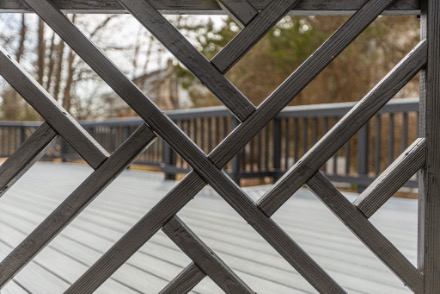
Metal railings can provide a rugged or sleek look to your deck, depending on the style you choose. They work well with traditional wood decks or composite decks, creating a unique combination of two foundational elements that can add a modern touch to a traditional space or complete the look of a rustic deck.
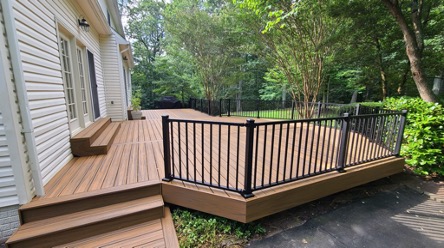
Aluminum and steel are particularly popular for contemporary decks because they can provide a streamlined appearance while requiring less maintenance than traditional painted wood. Trex currently offers aluminum Signature and Select systems as well as Enhance steel railing, while TimberTech offers metal systems such as Impression Rail Express and Fulton Rail.
For example, TimberTech’s Impression Rail Express uses powder-coated aluminum and a panelized design that eliminates the need to fasten individual balusters one at a time.
Choosing the Right Railing for Your Northern Virginia Home
When choosing a railing for your deck, it’s important to consider factors like safety, durability, maintenance, and aesthetics. Here are some deck railing ideas to help you make an informed decision:
- Safety: Make sure your railing meets safety requirements and is sturdy enough to withstand heavy usage.
- Durability: Consider the weather in your area and select a material that can withstand harsh conditions.
- Maintenance: Some materials require more maintenance than others, so consider your available time and resources before making a decision.
- Aesthetics: Choose a railing that complements the overall look and feel of your outdoor space.
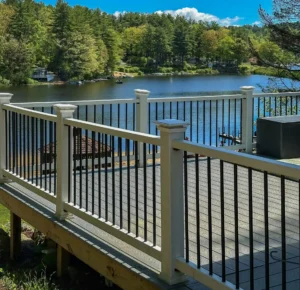
You should also consider the amount of visibility you want from your deck. For example, glass and cable-style systems can help preserve sightlines, while traditional balusters create a more defined visual boundary. Trex currently offers glass, mesh, and rod infill through its Signature railing system, while TimberTech offers options such as glass and narrow aluminum balusters in select collections.
Finally, consider how the railing will be used. If you frequently entertain outdoors, a drink rail can provide a convenient place for guests to set beverages. Both Trex and TimberTech offer drink-rail options in select railing systems.
Deck Railing Styles
There are many different styles of deck railings to choose from, each with its unique look and feel. Here are some of the most common deck railing styles:
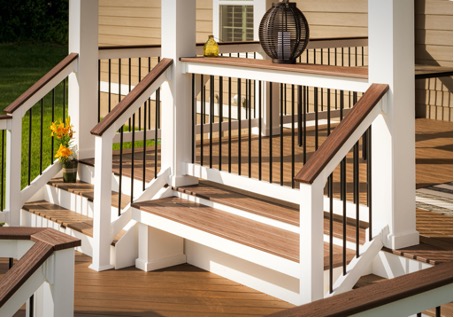
- Traditional: This style features a classic design with straight vertical balusters and a top rail.
- Modern: Modern deck railings are sleek and minimalistic, often featuring horizontal lines and metal accents.
- Rustic: Rustic railings are made from natural materials like wood or metal, with a weathered, textured appearance.
- Coastal: Coastal railings typically feature a nautical or beachy theme, with white or light-colored balusters and posts.
- Glass: Glass railings offer an unobstructed view of your outdoor space, making them a great choice for homes with beautiful views.
- Cable: Cable railings feature thin metal cables strung between posts, providing a modern and unobtrusive look.
- Curved: Curved railings are designed to follow the contours of your deck, adding a unique and eye-catching design element.
- Mixed-material: Combining materials such as aluminum posts with composite rails or incorporating different infill materials can create a customized appearance.
No matter which style you choose, be sure to select a railing that complements the overall look and feel of your outdoor space.
Trex Railing Options for Your Deck
If you’re specifically interested in Trex railing, the current product lineup gives homeowners several options depending on the desired style, material, and budget. Trex’s current comparison tool identifies Signature, Transcend, Select, and Enhance railing systems, with additional Signature X-Series options available for homeowners looking for frameless glass or cable-style designs.
Trex Signature® railing is an aluminum-based system with glass, mesh, rod, and square-baluster infill options. Trex backs the Signature railing system with a 50-year Limited Residential Warranty.
Trex Transcend® is a composite railing system designed for customization, with multiple rail profiles, colors, and infill options. Trex describes Transcend as its highest-performance composite railing option.
Trex Select® provides a simpler railing solution, with current Classic and T-Rail composite configurations as well as Select aluminum options.
Trex Enhance™ Steel railing is an entry-level steel railing option designed to provide functional, modern styling at a more budget-conscious price point.
Don’t Forget About Local Building Requirements
A railing should look good, but it also needs to perform its primary safety function. Railing height, baluster spacing, stair requirements, structural attachment, and other details are subject to applicable building codes. Trex provides product-specific installation instructions and code reports for its railing systems, while TimberTech likewise provides technical and building-code documentation for its railing products.
For residential applications, TimberTech notes that deck railings are typically at least 36 inches high, but local requirements can vary. Always verify the applicable Northern Virginia jurisdiction’s requirements before construction.
Upgrading Your Deck Railings
If you’re ready to upgrade your deck railings, we encourage you to schedule a personal consultation with one of our deck experts. We offer a variety of railing options, and our experts can help you choose the one that’s right for your home.
Don’t forget to check out our blog to stay updated on deck repair, resurfacing, and deck restoration tips and insights. In our next blog post, we’ll highlight the unseen side of decks in our first edition of Decks After Dark.