Are You Prepared for Your Deck to be Built?
Building a new deck is one of the best ways to expand your living space and enjoy the outdoors. Whether you’re dreaming of summer cookouts, family gatherings, or a quiet place to relax after work, a well-built deck can transform your backyard.
Before construction begins, however, there’s one important topic every homeowner should understand: deck building codes.
The good news is that you don’t need to become a construction expert. In this guide, the experts from DeckGuru that are here in Northern Virginia will explain deck building codes in plain English and help you understand what to expect when planning a deck project.
What Are Deck Building Codes?
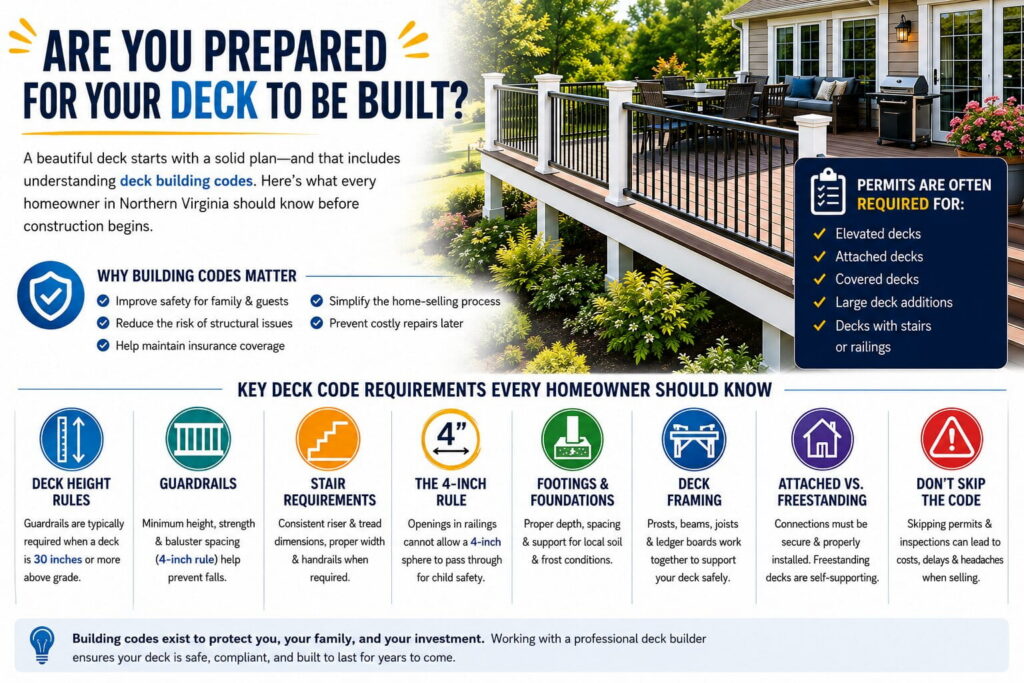
Deck building codes are safety standards that help ensure your deck is structurally sound and safe to use.
These requirements cover everything from the deck’s foundation and framing to stairs, railings, and attachment points. While many homeowners think of building codes as red tape, they actually exist to protect homeowners, families, and visitors.
Building codes help ensure your deck can safely support people, furniture, grills, and even winter snow loads. They also reduce the risk of structural failures, injuries, and expensive repairs down the road.
Most deck codes are based on national standards but are enforced and sometimes modified by local jurisdictions.
Why Homeowners Should Care About Building Codes
Many homeowners assume building codes only matter during inspections. In reality, code compliance affects much more than that.
Following deck building codes can:
- Improve safety for family and guests
- Reduce the risk of structural issues
- Help maintain homeowner’s insurance coverage
- Simplify the home-selling process
- Prevent costly repairs and modifications later
A deck that doesn’t meet code requirements can create problems long after construction is complete, especially if you decide to sell your home.
Do You Need a Permit to Build a Deck?
One of the first questions homeowners ask is whether a permit is required. The answer is typically yes, though it depends on the size and design of the deck as well as local regulations.
In many Northern Virginia jurisdictions, permits are often required for:
- Elevated decks
- Attached decks connected to the home
- Covered decks
- Large deck additions
- Decks with stairs or railings
Some small, ground-level decks may have fewer requirements, but every municipality has its own rules.
Because permit requirements can vary between Fairfax County, Loudoun County, Prince William County, Arlington, Alexandria, and other local jurisdictions, it’s always best to verify requirements before beginning construction.
At DeckGuru, we help homeowners navigate the permitting process so there are no surprises along the way.

The Most Important Deck Code Requirements Homeowners Should Know
Don’t get caught off-guard with a deck violation.
Deck Height Rules
The height of your deck often determines many of the safety requirements that apply.
One of the most common thresholds homeowners hear about is 30 inches above grade.
Once a deck reaches this height, guardrails are typically required to help prevent falls.
Even if your deck is lower than 30 inches, incorporating railings may still improve safety, especially for families with children, elderly relatives, or frequent guests.
Understanding Guardrails
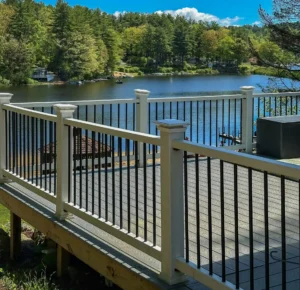
Guardrails are designed to prevent accidental falls from elevated surfaces. Most residential decks require guardrails that meet minimum height requirements and are strong enough to withstand significant force.
You’ll also notice that deck railings have spacing requirements between balusters, which are the vertical pickets that make up the railing system. These spacing requirements are intended to prevent small children from slipping through the railing.
Modern railing systems offer many design options while still meeting safety requirements, including aluminum, composite, cable, and glass railings.
Stair Requirements
Deck stairs must meet specific safety standards because inconsistent steps are one of the most common causes of trips and falls.
Building codes generally require:
- Consistent stair heights
- Consistent tread depths
- Adequate stair width
- Proper handrails when required
While homeowners may not notice small differences between steps, even slight inconsistencies can create safety hazards.
That’s why inspectors carefully review stair construction during the permitting process.
The “4-Inch Rule”
One of the most commonly referenced deck safety standards is the 4-inch rule.
In simple terms, openings in railings typically cannot be large enough for a 4-inch sphere to pass through.
This requirement exists to help prevent children from slipping through the railing system.
It’s a small detail that has a big impact on safety.
Deck Footings and Foundations
Every deck starts with a foundation.
The footings below your deck support the weight of the entire structure and help prevent shifting, settling, and movement over time.
In Northern Virginia, footings are especially important because they must account for local soil conditions and frost depth.
Properly installed footings help ensure your deck remains stable for years to come.
Common foundation mistakes include:
- Footings that are too shallow
- Improper footing spacing
- Undersized support posts
- Inadequate load support
Because foundation work is buried underground, it’s one of the most important parts of the entire project—even though homeowners rarely see it once construction is complete.

Understanding Deck Framing
If footings are the foundation of a deck, framing is its skeleton.
Deck framing consists of structural components such as:
- Posts
- Beams
- Joists
- Ledger boards
Together, these components support the deck surface and distribute weight safely throughout the structure.
While homeowners often focus on decking materials and aesthetics, the quality of the framing ultimately determines how strong and long-lasting the deck will be.
A properly designed framing system helps prevent:
- Sagging
- Excessive movement
- Structural failure
- Premature wear
At DeckGuru, we believe the parts you don’t see are just as important as the parts you do.
Attached vs. Freestanding Decks
Not all decks are built the same way.
Attached Decks
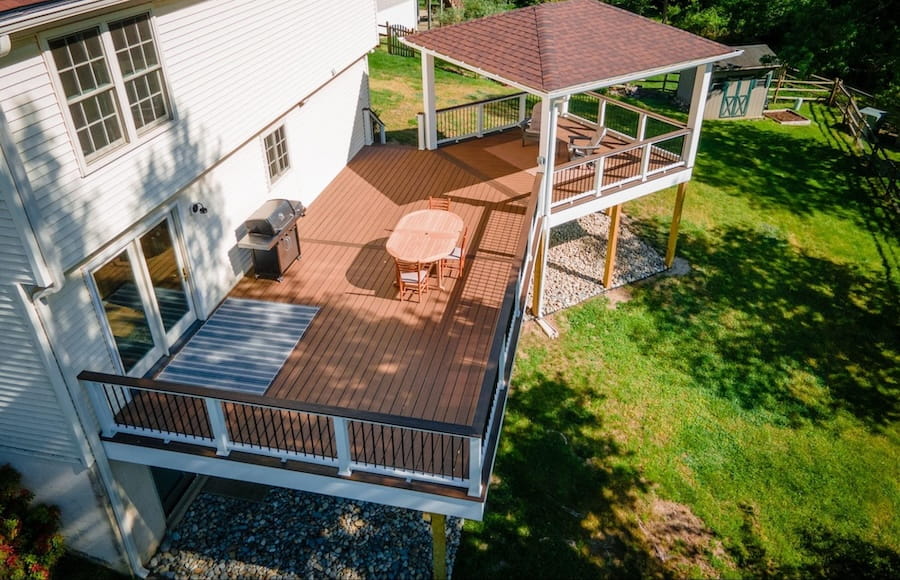
An attached deck is physically connected to your home’s structure.
These decks often require additional code requirements because the connection point between the deck and the home must be engineered properly.
One of the most critical components is the ledger board, which helps transfer loads between the deck and the house.
Improper ledger installation is one of the leading causes of deck failures nationwide.
Freestanding Decks
A freestanding deck is completely self-supporting and does not rely on the home’s structure for support.
In some situations, a freestanding design may simplify construction and reduce certain structural concerns.
The best option depends on your home’s design, yard conditions, and long-term goals.
What Happens If a Deck Doesn’t Meet Code?
Some homeowners consider skipping permits or inspections to save time.
Unfortunately, doing so can create significant problems later.
Potential consequences include:
Failed Inspections
If a deck doesn’t meet code requirements, corrections may be required before approval is granted.
Additional Costs
Fixing code violations after construction is often more expensive than doing the work correctly the first time.
Challenges When Selling Your Home
Many buyers and home inspectors ask questions about permits and code compliance during the sale process.
Unpermitted structures can complicate transactions and create concerns for potential buyers.
Insurance Concerns
In some situations, insurance claims may become more complicated if a structure was built without required permits or inspections.
Frequently Asked Questions About Deck Building Codes
How high can a deck be without a railing?
Requirements vary by jurisdiction, but many building codes require guardrails once a deck is approximately 30 inches above grade.
How deep do deck footings need to be?
Footing depth depends on local soil conditions, frost depth, and deck design.
Can I build a deck without a permit?
Some small deck projects may not require permits, but many deck projects do. Always verify local requirements before starting construction.
Are composite decks subject to different codes?
Composite decking materials must meet specific performance standards, but the overall structural code requirements remain similar.
How long does a deck permit take in Northern Virginia?
Permit timelines vary by jurisdiction and project complexity. Working with an experienced contractor can help streamline the process.
Why Working With a Professional Deck Builder Matters
Deck construction involves much more than selecting colors and materials.
An experienced deck builder understands:
- Local permit requirements
- Structural design standards
- Inspection processes
- Safety requirements
- Municipal regulations
Professional guidance can save time, reduce stress, and help avoid costly mistakes.
Build With Confidence With DeckGuru
Building a deck should be exciting—not overwhelming. At DeckGuru, we help homeowners throughout Northern Virginia navigate permits, inspections, and local building requirements while creating beautiful outdoor living spaces built to last.
Whether you’re planning a simple backyard deck or a custom multi-level outdoor retreat, our team can help ensure your project is designed and built with safety, quality, and compliance in mind.
Contact DeckGuru today to schedule a consultation and start planning your dream deck.